

Author
Lucian
- Lived
- Lived 125 CE to 180 CE
- From
- From Ancient Greek
- Born in
- Born in Samosata, Roman Syria
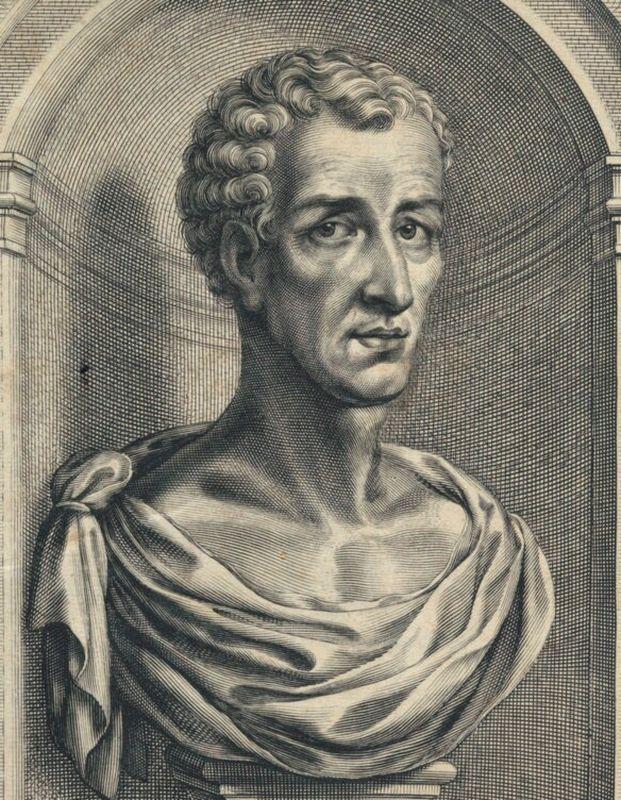
Lucian was born about 125 CE at Samosata, on the Euphrates in the Roman province of Syria; his first language was probably Syriac, but everything he wrote is in Greek. Almost all that is known of his life comes from his own works, which are literary performances rather than records, and have to be read that way. In The Dream, a speech he gave on a visit home in middle life, he says his family was of modest means and apprenticed him to an uncle who carved statues; on his first day he struck the marble too hard and broke it, was beaten, ran home in tears, and that night dreamed of two women, Sculpture and Culture, each pleading for him. He chose Culture. He studied rhetoric in Ionia, tried the law courts and made his name as a travelling lecturer, speaking in Greece, Italy and Gaul, where he seems to have held a well-paid teaching post. Around 160 he came back east a rich man, and in about 165 he settled in Athens and brought his parents to live with him. In the decade there he turned from display speeches to the form he was proudest of inventing, the comic dialogue, which crossed the philosophical dialogue of Plato with the mockery of Old Comedy and the Cynic Menippus. Out of it came the Dialogues of the Dead, the Dialogues of the Gods, Philosophies for Sale and Hermotimus, along with A True Story, a voyage to the moon that announces at the start that every word of it is a lie, and the pamphlets in which he went after two religious showmen of his day: Peregrinus, who burned himself alive at Olympia in 165, and the oracle-monger Alexander of Abonoteichus. More than eighty works have come down under his name. In old age, possibly under Commodus, he accepted a salaried post in the government of Egypt, and after that he drops out of the record; he died some time after 180. Rabelais, Swift, Fielding and Voltaire all learned from him.
Lucian once called on Alexander of Abonoteichus, the prophet whose snake-god sold oracles. Offered the holy man's hand to kiss, he bit it hard. Alexander calmed his furious followers, made peace, and lent him a ship home. Halfway across, the weeping captain confessed his orders were to throw Lucian overboard, and refused to obey them. So Lucian tells it.
The first button needs the app on this device; the second gets it there.
In the canon
- Satires160 BCE
- Satirical Sketches165 CE