

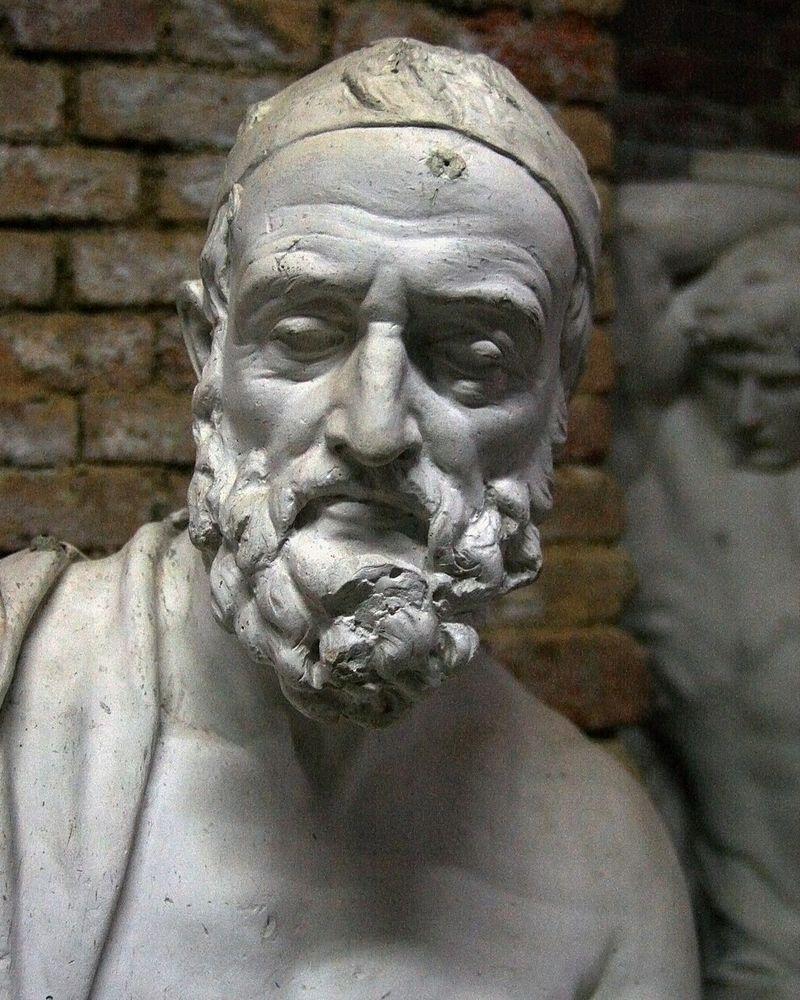
Author
Polybius
- Lived
- Lived 200 BCE to 118 BCE
- From
- From Ancient Greek
- Born in
- Born in Megalopolis, Greece
Born around 200 BCE at Megalopolis in Arcadia, Polybius was the son of Lycortas, a landowner who rose to be general of the Achaean League, the federation of Peloponnesian cities that was then the leading power in southern Greece. He grew up among its soldiers and statesmen, and in 182 BCE he was chosen to carry the funeral urn of Philopoemen, the League's great general, at his burial in Megalopolis. In 170 or 169 BCE he was elected hipparch, commander of the League's cavalry, but after Rome crushed Macedon at Pydna in 168 BCE the Romans demanded a thousand leading Achaeans whose loyalty they doubted, and in 167 Polybius was shipped to Italy as one of them. Where most of the hostages were dispersed among the towns of Etruria, he was allowed to stay in Rome, in the house of Lucius Aemilius Paullus, the victor of Pydna, and became tutor and lifelong friend to the general's son Scipio Aemilianus. Seventeen years of detention gave him the senators, generals and records of the city that had conquered his own, and the question at the centre of his life's work: how, in fewer than fifty-three years, nearly the whole inhabited world had fallen under the rule of Rome. Released in 150 BCE, he was with Scipio at the siege and destruction of Carthage in 146, and after Rome sacked Corinth that same year he helped settle the government of the Greek cities, several of which raised monuments to him. He travelled widely to see the ground he wrote about. His Histories ran to forty books, from the first war with Carthage in 264 BCE down to 146; the first five survive whole and the rest in fragments, among them Book Six, which explains the Roman constitution as a balance of monarchy, aristocracy and democracy. He also wrote a monograph on the Numantine War, now lost, and lived into his eighties.
In the spring of 146 BCE Polybius stood beside Scipio Aemilianus as Carthage burned. Scipio wept for his enemies and recited Homer's lines on the fall of Troy, then turned, grasped Polybius by the hand and told him he dreaded that the same doom would one day be pronounced on his own country.
The first button needs the app on this device; the second gets it there.
In the canon
- The Rise of the Roman Empire150 BCE