

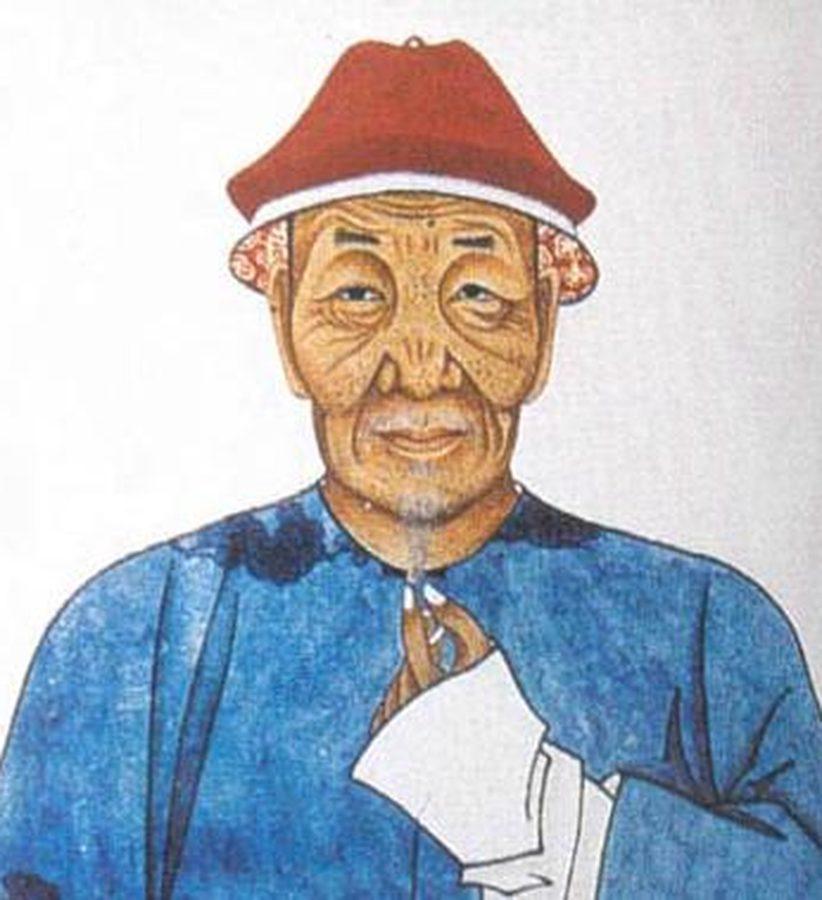
Author
Pu Songling
- Lived
- Lived 1640 to 1715
- From
- From Chinese
- Born in
- Born in Zichuan, China
Pu Songling was born on June 5, 1640, in Pujia village in Zichuan, Shandong, four years before the Ming dynasty fell to the Manchus, the third of four sons of Pu Pan, a scholar who had failed the first rung of the civil service examinations and turned to trade to keep the family. The boy did what his father could not. In 1658, at eighteen, he passed the county, prefectural and circuit examinations in first place, and the provincial education commissioner, the poet Shi Runzhang, singled out his essays for praise. It was the last examination he ever passed. He sat the provincial examination again and again for the rest of his working life and never earned the second degree that led to office. In 1670 he went south to Baoying in Jiangsu as secretary to the county magistrate Sun Hui and came back within a year. From 1679 he earned his living as tutor to the sons of the Bi family, gentry of Xipu, also in Zichuan, a post he held for some thirty years while he wrote. The work of those years was Strange Tales from a Chinese Studio, close to five hundred stories of fox spirits, ghosts, scholars, monks and judges of the underworld, set down in a terse, allusive classical prose; its preface is dated 1679, and he went on adding tales into the 1700s. He also wrote poems, essays, vernacular songs and a manual on farming and silkworms. In 1711, at seventy-one, he was named a tribute student, an honour granted for seniority rather than success. His wife, Lady Liu, died in 1713, and Pu died at home on February 25, 1715. The tales circulated in manuscript for half a century until Zhao Qigao printed them at Hangzhou in 1766, and they have been read, copied, staged and filmed across China ever since; Herbert Giles made the first large English selection in 1880.
In the preface he dated 1679, Pu told the story of his birth. His father dreamed that a sickly Buddhist monk, half covered by his robe, came in with a round plaster on his breast, and woke to find his newborn son marked with a black patch in the same place. Pu blamed his failures on that monk's destiny.
The first button needs the app on this device; the second gets it there.
In the canon
- Strange Tales From a Chinese Studio1766