

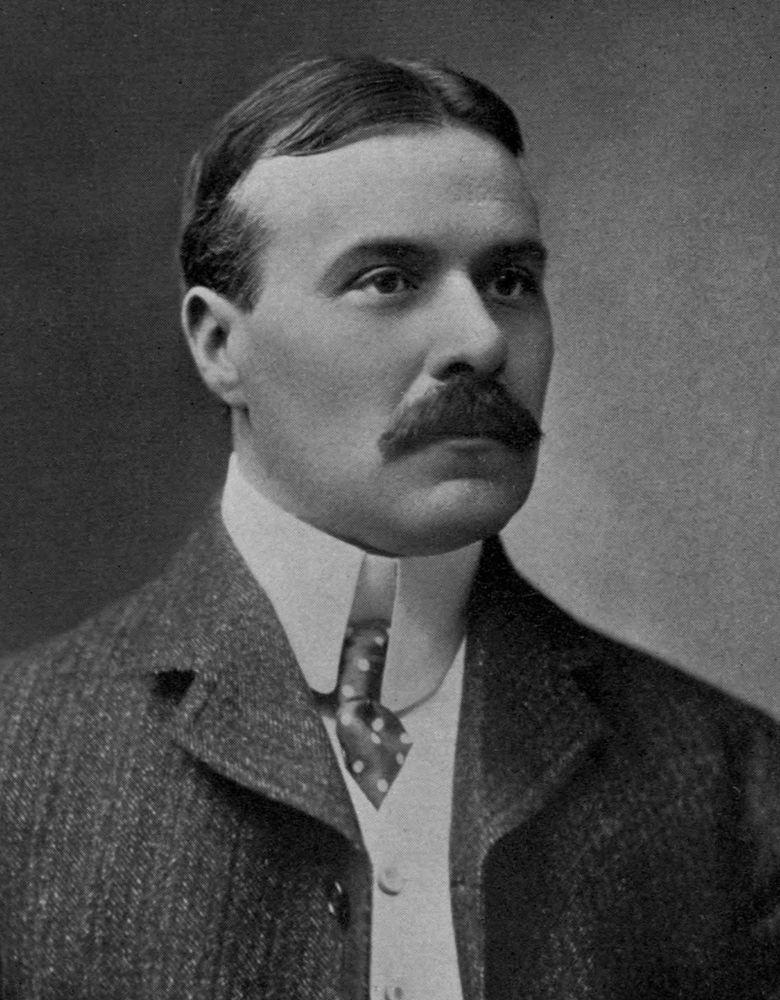
Author
Robert W. Chambers
- Lived
- Lived 1865 to 1933
- From
- From American
- Born in
- Born in Brooklyn, New York
Robert William Chambers was born on May 26, 1865, in Brooklyn, New York, the son of William P. Chambers, a corporate and bankruptcy lawyer, and Caroline Smith Boughton, whose father, Joseph Boughton, had been his father's partner in the firm of Chambers and Boughton; his brother Walter Boughton Chambers became an architect. He was schooled at the Brooklyn Polytechnic Institute and entered the Art Students League at about twenty, where Charles Dana Gibson was a fellow student, then spent 1886 to 1893 in Paris at the École des Beaux-Arts and the Académie Julian, showing work at the Salon as early as 1889. Back in New York he sold illustrations to Life, Truth and Vogue, then turned to writing. His first novel, In the Quarter, appeared in 1894, and in 1895 he published The King in Yellow, a book of stories linked by a forbidden play that drives its readers mad, set partly in an imagined future New York and partly among the art students of Paris. The Red Republic (1895), Lorraine (1898) and Ashes of Empire (1898), novels of the Franco-Prussian War and the Commune, followed, and in 1898 he married Elsa Vaughn Moller; their son, Robert Edward Stuart Chambers, was born the next year. Cardigan (1901), set at the outbreak of the American Revolution, began a line of historical novels about colonial New York, several rooted in Broadalbin, the Fulton County village his grandfather had helped to settle and where he kept the family house. He went back to the weird in The Maker of Moons (1896) and In Search of the Unknown (1904), but his fortune came from society romances such as The Fighting Chance (1906), The Firing Line (1908) and The Common Law (1911), bestsellers serialised in magazines and filmed again and again. After 1924 he wrote only historical fiction. He died in New York on December 16, 1933, aged sixty-eight.
In 1887, an art student of twenty-two, Chambers sat in Munich writing a novel about the painters and models of the Paris Latin Quarter. In the Quarter did not reach print until 1894, by which time he was back in New York, selling drawings to Life and Vogue and about to give up the pencil for the pen.
The first button needs the app on this device; the second gets it there.
In the canon
- The King In Yellow1895