

Author
Sir Thomas Browne
- Lived
- Lived 1605 to 1682
- From
- From English
- Born in
- Born in London, England
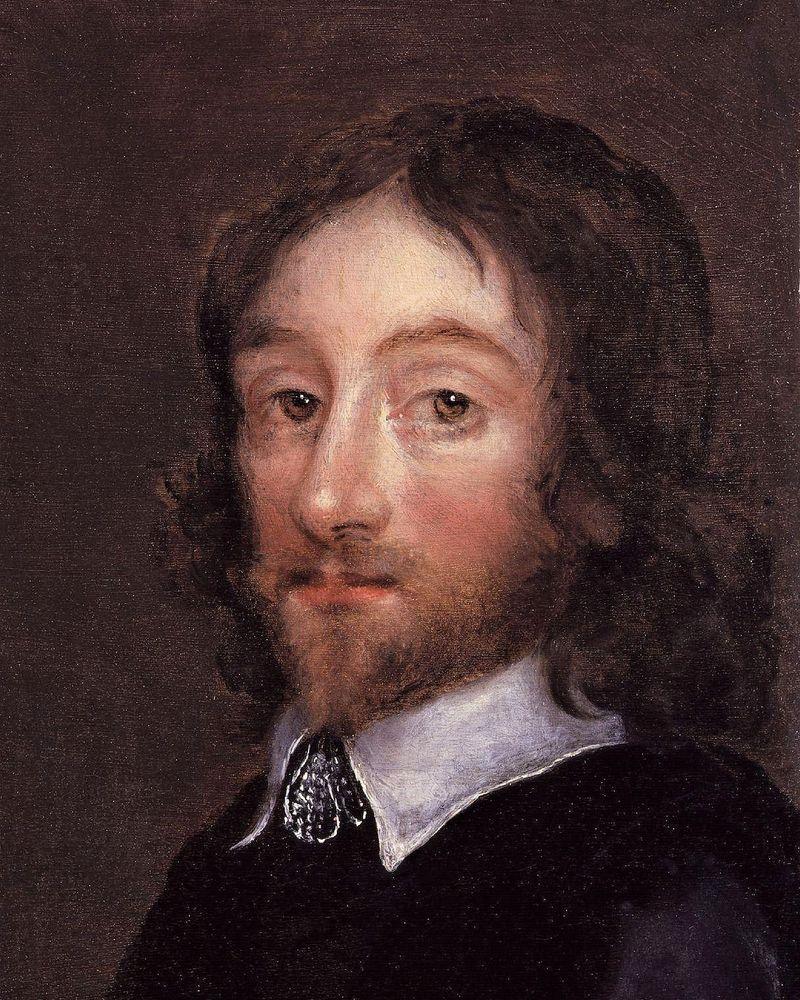
Born on 19 October 1605 in the parish of St Michael, Cheapside, in London, Thomas Browne was the son of a silk merchant from Cheshire who died while the boy was small; his mother, Anne Garraway, went on to marry Sir Thomas Dutton. He was educated at Winchester College and at Broadgates Hall, Oxford, where in 1624 he gave the undergraduate oration when the hall was refounded as Pembroke College, and he took his degrees in 1627 and 1629. He then went abroad to study medicine at Montpellier and Padua and took his doctorate at Leiden in 1633. Back in England he practised near Halifax, where he began a private account of his own faith, and by the late 1630s he had settled in Norwich, the city he served as a physician for the rest of his life. That private account circulated in manuscript and was printed without his consent in 1642; he answered with an authorised Religio Medici in 1643, and the book was soon read in Latin across Europe and placed on the Catholic Index. In 1641 he married Dorothy Mileham of Burlingham, and they had ten children, six of whom died before their parents. Pseudodoxia Epidemica (1646), a long and good-humoured inquiry into vulgar errors, tested hundreds of received beliefs against experiment and reason. In 1658 he published Hydriotaphia, Urn Burial, a meditation on death and memory, together with The Garden of Cyrus, a study of the quincunx in nature and art. He kept notes on the birds and fishes of Norfolk, was made an honorary fellow of the College of Physicians in 1664, and was knighted by Charles II at Norwich in September 1671. He died in Norwich on 19 October 1682, his seventy-seventh birthday. A Letter to a Friend and Christian Morals were published after his death, in 1690 and 1716.
In about 1657 a field at Old Walsingham in Norfolk gave up between forty and fifty urns of burnt bones, buried less than a yard down in dry sand. Browne took them for Roman. They were Anglo-Saxon, but from those few pots of ash he made Urn Burial, a long meditation on oblivion and the vanity of fame.
The first button needs the app on this device; the second gets it there.
In the canon
- The Major Works1643
- Religio Medici1643
- Hydriotaphia, Urn Burial1658