

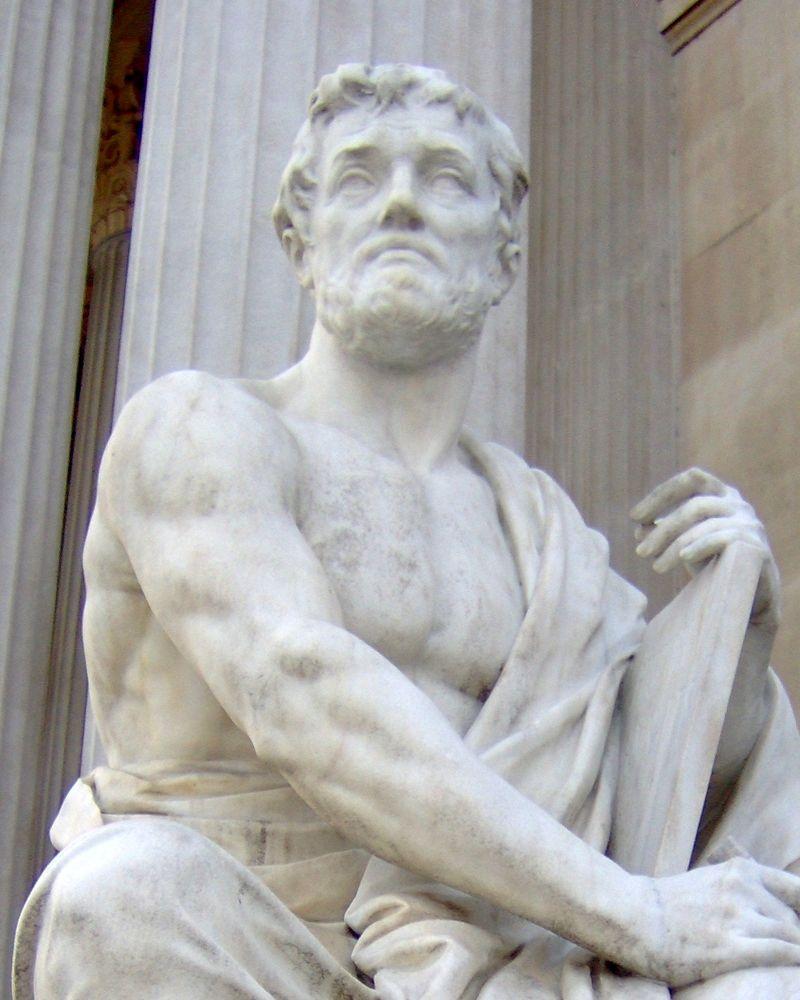
Author
Tacitus
- Lived
- Lived 56 CE to 120 CE
- From
- From Roman
Born around 56 CE into an equestrian family, most likely in Gallia Narbonensis or northern Italy, Tacitus came from a line with no senators in it, and even his first name is uncertain: Publius in the chief manuscript of his works, Gaius in a letter written centuries later. His father may have been the Cornelius Tacitus who served as a financial procurator in Gallia Belgica. He trained in rhetoric at Rome and in 77 or 78 married the daughter of Gnaeus Julius Agricola, the general who carried Roman arms to the far north of Britain. Under the Flavian emperors he climbed the ladder of offices, quaestor around 81, praetor in 88, and a member of the priestly college that kept the Sibylline Books and staged that year's Secular Games. From about 89 to 93 he served away from Rome, missing Agricola's death, and he sat in the Senate through the last terror of Domitian, years of silence and complicity that shadow everything he later wrote. In 97, as suffect consul under Nerva, he spoke the funeral oration for the old soldier Verginius Rufus. The next year brought his first books, the Agricola, a portrait of his father-in-law, and the Germania, a short ethnography of the peoples beyond the Rhine. In 100 he and his friend Pliny the Younger prosecuted Marius Priscus, governor of Africa, for extortion and won, and around 102 he published the Dialogue on Orators. Then he turned to history on the grand scale: the Histories, beginning with the civil wars of 69 and running through the Flavian dynasty, and the Annals, from the death of Augustus in 14 through Tiberius, Claudius and Nero. Both survive only in part. Around 112 to 113 he governed the province of Asia, as an inscription found at Mylasa records. He died around 120, having made Latin prose do something it had never done before: compress a whole age of power, fear and flattery into sentences of bitter, exact brevity.
At the races in the Circus, Tacitus fell into talk about literature with the Roman knight beside him, who at length asked whether he came from Italy or the provinces. You know me already, Tacitus answered, from your reading. The knight thought for a moment and asked: then are you Tacitus or Pliny? Pliny, who told the story, was delighted.
The first button needs the app on this device; the second gets it there.
In the canon
- The Agricola98 CE