

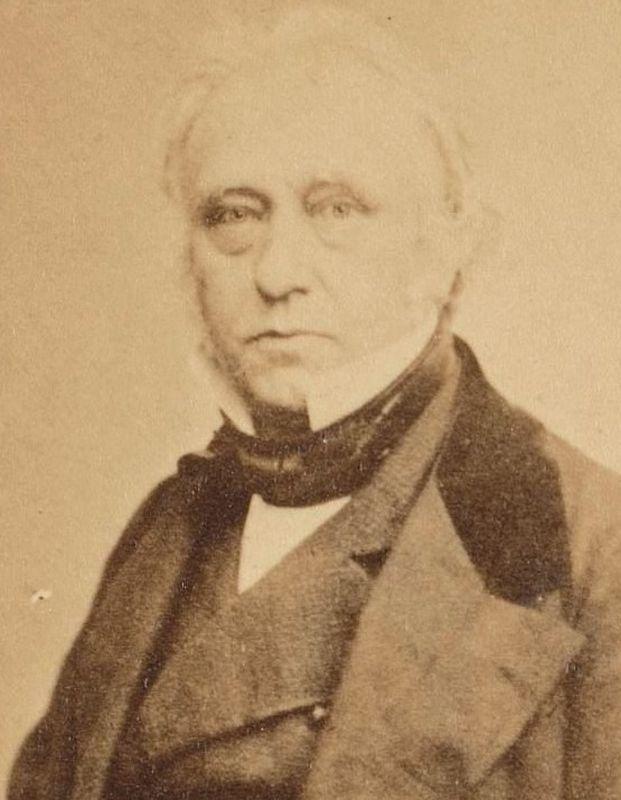
Author
Thomas Babington Macaulay
- Lived
- Lived 1800 to 1859
- From
- From English
- Born in
- Born in Rothley, England
Born on 25 October 1800 at Rothley Temple in Leicestershire, the house of his uncle Thomas Babington, Thomas Babington Macaulay was the eldest son of Zachary Macaulay, a former governor of Sierra Leone and a leading campaigner against the slave trade, and he grew up among the evangelical reformers of the Clapham Sect. A child who read everything and forgot almost nothing, he went up to Trinity College, Cambridge, won the Chancellor's Gold Medal for verse, and in 1825 made his name overnight with an essay on Milton in the Edinburgh Review, the first of the long essays that carried the Whig case to a vast reading public. He was called to the bar in 1826, entered Parliament for Calne in 1830, spoke for the Reform Bill, and after 1832 sat for Leeds. In 1834 he sailed for India as a member of the Governor-General's Supreme Council. There he chaired the Law Commission that drafted the Indian Penal Code, and on 2 February 1835 he wrote the Minute on Indian Education, which argued that government money should teach Western learning in English rather than Sanskrit and Arabic, and dismissed the classical literatures of India and Arabia in words still quoted against him. The government adopted its policy that March, and its effects on Indian schooling, language and class are argued over to this day. Home in 1838, he sat for Edinburgh, served in the cabinet as Secretary at War and later as Paymaster General, and published Lays of Ancient Rome (1842), whose Horatius generations of schoolchildren learned by heart, and his Critical and Historical Essays (1843). Defeated at Edinburgh in 1847, he gave himself to The History of England from the Accession of James the Second, whose first two volumes (1848) and next two (1855) sold in numbers no historian had known, telling the Revolution of 1688 as the making of English liberty. Raised to the peerage as Baron Macaulay of Rothley in 1857, he never married, and he died in Kensington at the end of 1859 with the History unfinished.
When he was about four, his father took him to call on Lady Waldegrave at Strawberry Hill, Horace Walpole's Gothic house at Twickenham. In the great gallery a servant spilt hot coffee over the boy's legs. When the hostess, all kindness, later asked how he was feeling, he looked up and replied: 'Thank you, madam, the agony is abated.'
The first button needs the app on this device; the second gets it there.
In the canon
- The History of England1848