

Author
Tsangnyön Heruka
- Lived
- Lived 1452 to 1507
- From
- From Tibetan
- Born in
- Born in Kharkha, Tibet
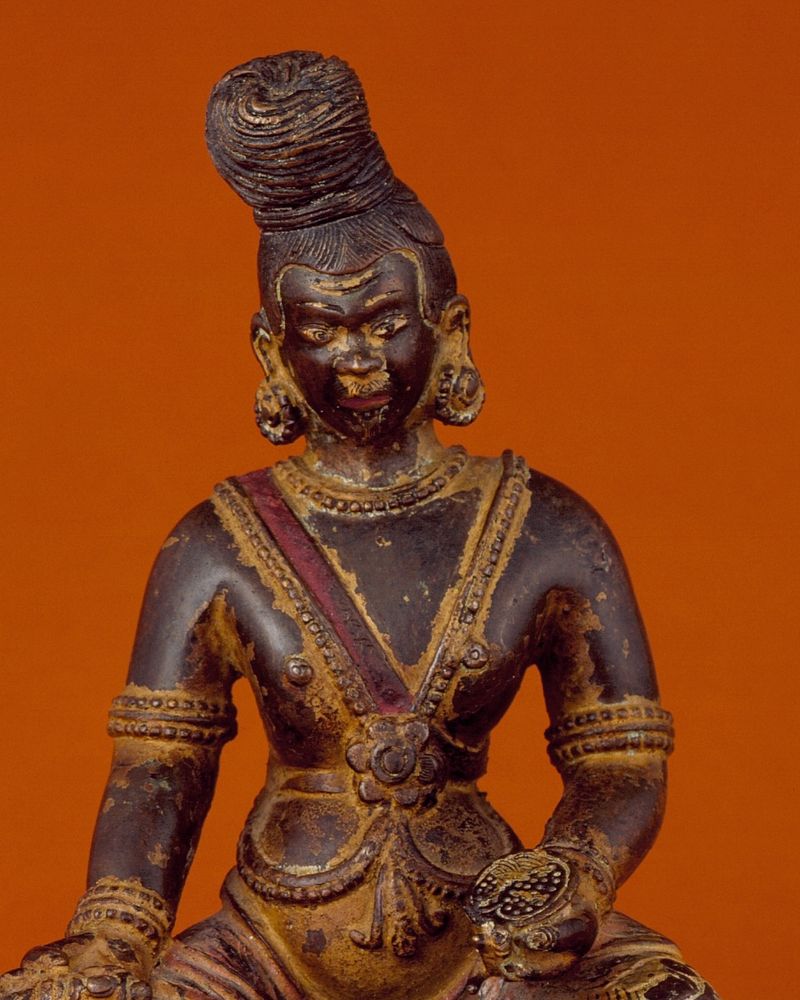
Tsangnyön Heruka was born in 1452 in Kharkha, a village in the Nyang valley of Tsang in southern Tibet, and was given novice vows as a small boy under the name Sangye Gyaltsen. Dreams and visions pulled him away from home in his teens; he studied with the Kagyu master Shara Rabjampa Sangye Sengge, who passed on to him the Aural Transmissions of Milarepa's line, meditated on the holy mountain of Tsari, and spent three years reading the tantras at Pelkhor Chöde in Gyantse. At twenty-one he walked out of the monastery and never went back. Modelling himself on the wandering siddhas of India, he let his hair grow long, carried a skull-cup and a staff, and dressed in bone ornaments and the ashes of the charnel ground, and the people who saw him named him the Madman of Tsang; he took the title Heruka, the blood-drinking deity of the tantras, as his own. Monks who came to argue with him found that he could answer them from scripture, quoting at length, and he became a teacher to lords on both sides of Tibet's wars and a mediator between them. In 1488, at Lapchi in the mountains on the Nepal border, he completed The Life of Milarepa and gathered The Hundred Thousand Songs, recasting the life of a yogin who had been born some four centuries earlier into the version almost every later reader has known. He was among the first in Tibet to put woodblock printing to work for literature, and he had his books cut and printed for wide circulation. In 1504 the king of Kathmandu invited him to restore the stupa of Swayambhu; in 1505 he compiled the life and songs of Marpa. He fell ill in 1507 and died that year at Rechungpuk, near Tsetang, aged fifty-five. Almost everything known of his own life comes from biographies written by three of his disciples, read in modern times by Stefan Larsson and Andrew Quintman.
In 1504 Ratna Malla, king of Kathmandu, asked the madman from Tsang to restore Swayambhu, the great stupa on its hill above the valley. Tsangnyön crossed the Himalaya to do it, and the townspeople came out to help in such numbers that the work was finished in less than three months.
The first button needs the app on this device; the second gets it there.
In the canon
- The Life of Milarepa1488