

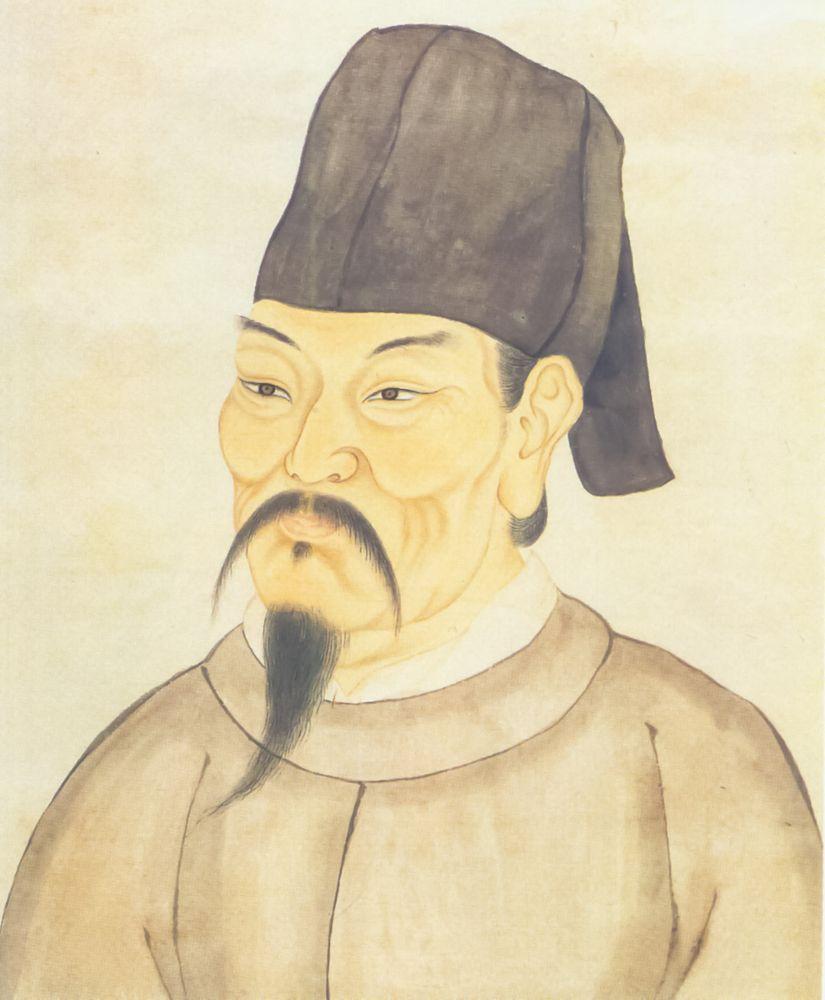
Author
Wang Wei
- Lived
- Lived 701 CE to 761 CE
- From
- From Chinese
- Born in
- Born in Qi County, Shanxi, China
Born in 701, though some sources give 699, in Qi County in Shanxi, Wang Wei was the eldest of five brothers in an official family that later settled at Puzhou, on the Yellow River. His mother was a devout Buddhist, and he took the courtesy name Mojie, so that with his given name he signed himself after Vimalakirti, the lay sage of a Buddhist sutra. Gifted early in poetry, music and painting, he passed the imperial examination in 721 and was made Deputy Master of Music at court, then was sent down to a granary post in the provinces after a lion dance was performed in breach of court etiquette. Under the patronage of the chief minister Zhang Jiuling he rose again, and in 737 he travelled as an envoy to the northwestern frontier at Liangzhou, the journey behind some of his starkest poems of desert and border. In the 740s he acquired a country estate on the Wang River at Lantian, in the Zhongnan Mountains, once the property of the poet Song Zhiwen, and there with his younger friend Pei Di he wrote the twenty quatrains of the Wang River Collection, among them "Deer Enclosure." When An Lushan's rebels took Chang'an in 756 he was too ill with dysentery to follow the fleeing court; he was captured, taken to Luoyang and forced into office under the rebel regime. After the Tang recaptured the city in 757 he was arrested for treason and spared, through the intercession of his brother Wang Jin and a poem of loyal grief he had written in captivity. He returned to court and rose to be Right Assistant Director of the Department of State Affairs, the title by which he is still called Wang Youcheng, and died in 761. Revered as the Poet Buddha, he was later named the founder of the Southern School of Chinese landscape painting, and his quiet quatrains of empty mountains and evening light are among the best loved in the language.
Held by the rebels in Puti Monastery at Luoyang, Wang Wei had a visit from his friend Pei Di, who told him the rebels had ordered the captured court musicians to play at Frozen Emerald Pond, and the musicians wept as they played. Wang Wei wrote a quatrain about it. After the war, that poem helped save his life.
The first button needs the app on this device; the second gets it there.
In the canon
- Poems750 CE