
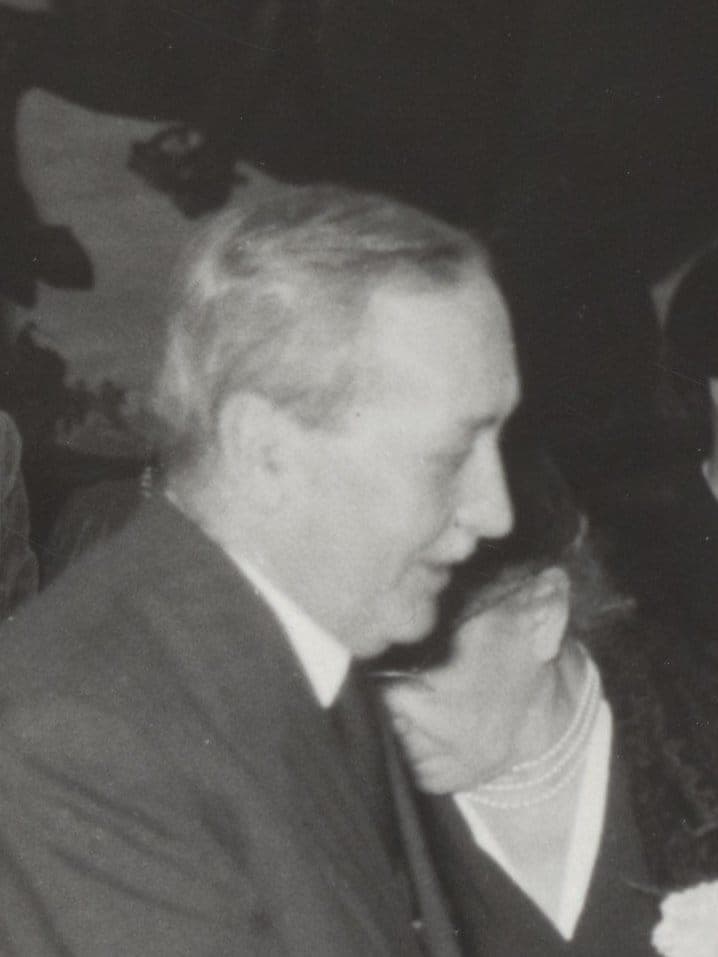
Author
Willem Elsschot
- Lived
- Lived 1882 to 1960
- From
- From Belgian
- Born in
- Born in Antwerp, Belgium
Willem Elsschot was the pen name of Alfons De Ridder, born on May 7, 1882, in Antwerp, the son of a family of bakers. He was forced out of the city's athenaeum for misconduct as a teenager, but the poet Pol de Mont, his Dutch teacher, had already given him a love of verse, and he returned to his studies to take a licentiate in commercial sciences in 1904. The years that followed took him through offices in Paris, Rotterdam, Schiedam and Brussels; a 1907 stay in a Paris boarding house became his first novel, Villa des Roses (1913), and a clerkship at the Gusto shipyard in Schiedam later furnished the firm in Kaas. He married Fine Scheurwegen, and after the First World War he built the business that kept him for the rest of his life, an advertising agency in Antwerp, founded with Léon Leclercq in 1919 and his alone from 1931. He advertised, he said, because he could never live off his pen. Een ontgoocheling (1920), De verlossing (1921) and Lijmen (1924), the story of the smooth-talking Boorman selling space in a worthless trade magazine to the businessmen it flatters, were poorly received, and Elsschot published no new novel for nearly a decade. In 1933 the Dutch writers Jan Greshoff and Menno ter Braak took him up, and he answered with Kaas (Cheese), in which the Antwerp clerk Frans Laarmans becomes a cheese wholesaler and cannot sell his Edams; it became the most translated Dutch-language novel from Flanders. Tsjip (1934), Pensioen (1937), Het been (1938), the sequel to Lijmen, Het tankschip (1942) and Het dwaallicht (1946) followed, short books in a plain, exact and ironic Dutch, alongside a small body of poems that includes the much-quoted Het huwelijk. He won the Constantijn Huygens Prize in 1951, saw his Verzameld werk gathered in 1957, and died in Antwerp on May 31, 1960, at the age of seventy-eight.
On 2 March 1933, in the study of his friend Ary Delen in Antwerp, Elsschot read aloud the manuscript of Kaas, his first novel in nearly a decade. Among the listeners was the publisher Bob van Kampen, who later described it as an evening he could never forget; because he had been in the room, his firm published the book.
The first button needs the app on this device; the second gets it there.
In the canon
- Villa Des Roses1913
- Soft Soap1931
- Cheese1933
- The Leg1946
- Will O' The Wisp1947
- Verzameld Werk1957