

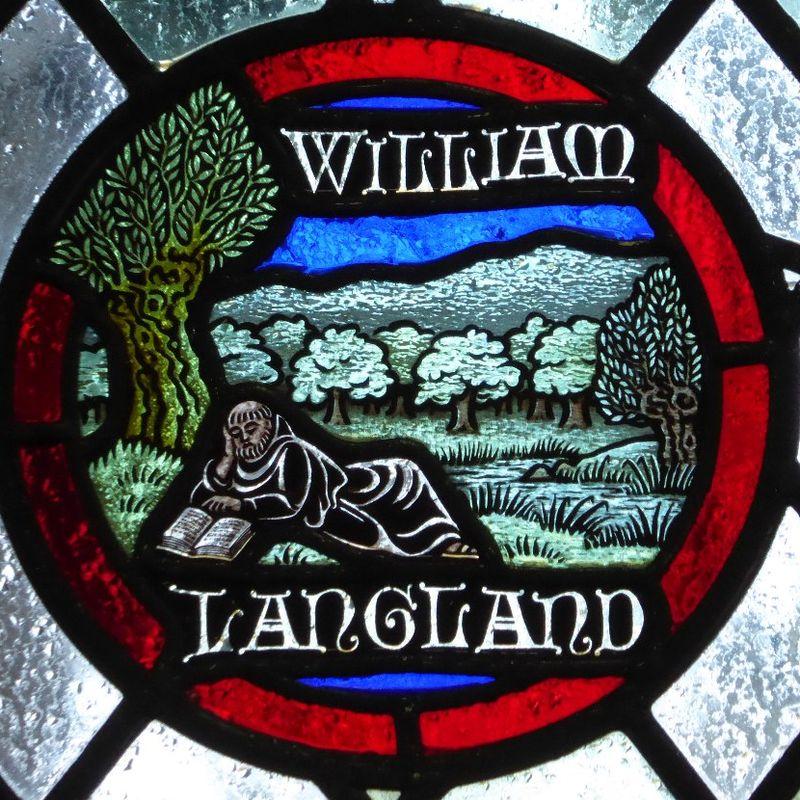
Author
William Langland
- Lived
- Lived 1332 to 1386
- From
- From English
- Born in
- Born in West Midlands, England
Almost nothing about William Langland is known for certain, and what is known comes from two places: a note in a manuscript and the poem itself. A Latin memorandum written into a copy of Piers Plowman now at Trinity College Dublin, in a hand of the early fifteenth century, says that the book was made by William de Langlond, son of Stacy de Rokayle, a gentleman who lived at Shipton-under-Wychwood in Oxfordshire as a tenant of the Despensers. The Tudor antiquary John Bale later put his birth at Cleobury Mortimer in Shropshire, though Bale called him Robert. Everything else is read out of the poem, which is a risky way to write a life. Its dreamer is called Will, once calls himself Long Will, falls asleep on a May morning on the Malvern Hills, and later lives on Cornhill in London with a wife named Kitte and a daughter, Kalote. At one point he gives his age as forty-five, which is how scholars arrive at a birth around 1330. He seems to have been a clerk without a benefice, living thinly by singing prayers for the dead, and he spent most of his adult life writing and rewriting a single poem. The first version, now called the A text, was made after the great wind of January 1362, which it remembers; a far longer B text followed around 1377 to 1379, its field full of folk crowded with friars, pardoners, lawyers, ploughmen and the Seven Deadly Sins in tavern clothes; and in the 1380s he began a third, the C text, going back over the poem almost line by line. No record of his death survives. A scribe named John But added a few lines to one copy saying that Death had struck Will down and that he now lay buried, and since But appears to have died in 1387, Langland was most likely dead by about 1386.
In the last version of the poem the dreamer gives his own address: a cottage on Cornhill in London, shared with Kitte, where he goes about dressed like an idler. One hot harvest Reason and Conscience stop him and ask why he does no work. He answers that he earns his bread singing the placebo and dirige for the dead.
The first button needs the app on this device; the second gets it there.
In the canon
- Piers the Ploughman1377