

Author
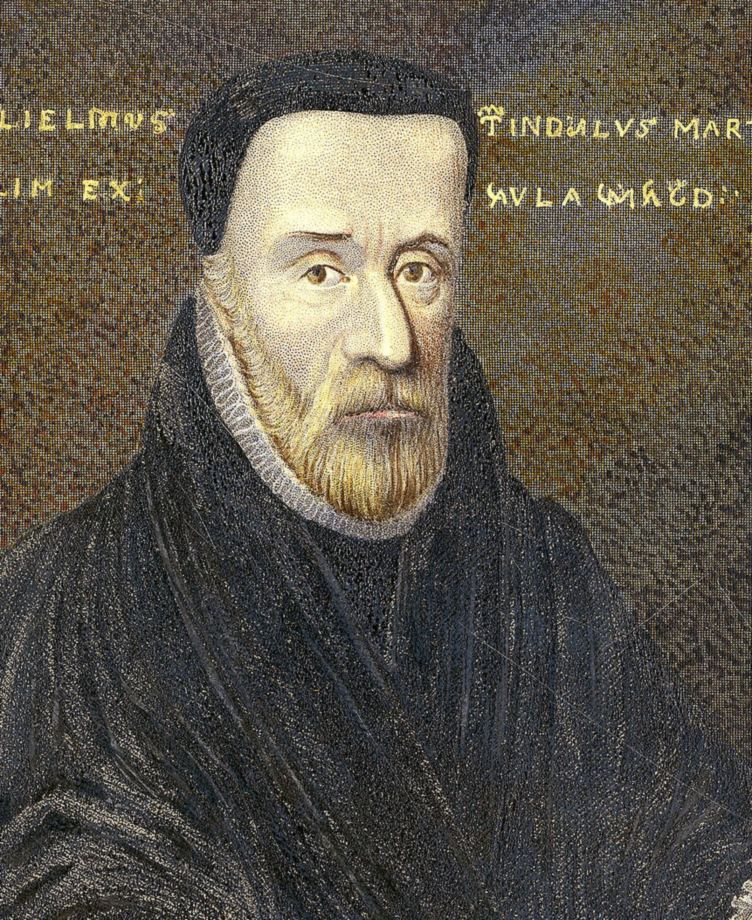
William Tyndale
- Lived
- Lived 1494 to 1536
- From
- From English
- Born in
- Born in Gloucestershire, England
William Tyndale was born around 1494 in Gloucestershire, most likely near Dursley in the Vale of Berkeley, into a family that also went by the name Hychyns, and it was as William Hychyns that he entered Magdalen Hall, Oxford, in 1506. He took his BA in 1512, the year he was ordained subdeacon, and his MA in 1515, then spent some years at Cambridge. Around 1521 he went home to Gloucestershire as chaplain and tutor in the household of Sir John Walsh at Little Sodbury, where his quarrels with the local clergy brought him before the chancellor of the diocese. Resolved that the Bible should be read in English, he went to London in 1523 hoping for the patronage of Cuthbert Tunstall, Bishop of London, was turned away, and lodged for a time with the cloth merchant Humphrey Monmouth. In 1524 he left England for good. A first printing of his New Testament, translated from the Greek, was cut short at Cologne in 1525, and he moved up the Rhine to Worms, where Peter Schöffer the Younger printed the complete text in 1526, the first New Testament printed in English. Copies reached England that year, and in October Tunstall had them bought up and burned. From Antwerp he published The Parable of the Wicked Mammon and The Obedience of a Christian Man (1528), the five books of Moses (1530), The Practice of Prelates (1530), which opposed Henry VIII's annulment, and An Answer unto Sir Thomas More's Dialogue (1531), his side of a long and bitter exchange in print with the future martyr. He issued a thoroughly revised New Testament in 1534. In May 1535 an Englishman named Henry Phillips, who had won his trust, betrayed him to the imperial authorities; he was imprisoned at Vilvoorde, near Brussels, convicted of heresy and executed there in October 1536. Much of his wording passed, through later revisions, into the King James Bible of 1611.
At Sir John Walsh's table in Little Sodbury, Tyndale argued Scripture with visiting churchmen until one said they would be better without God's law than the Pope's. His answer, as John Foxe told it, became his life's work: if God spared him, he would make a boy who drove the plough know more of the Scripture than that churchman did.
Lord, open the King of England's eyes.
The first button needs the app on this device; the second gets it there.
In the canon
- The Obedience of a Christian Man1528