
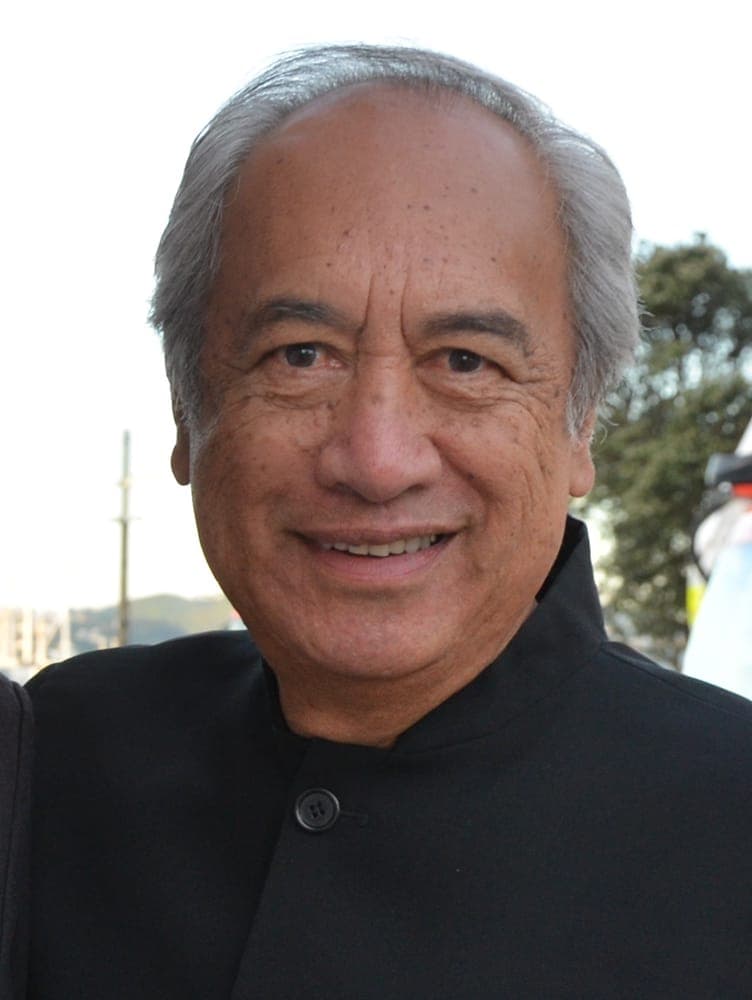
Author
Witi Ihimaera
- Lived
- Lived born 1944
- From
- From New Zealander
- Born in
- Born in Gisborne, New Zealand
Born Witi Tame Ihimaera Smiler on 7 February 1944 in Gisborne, on the east coast of New Zealand's North Island, he grew up among his Te Aitanga-a-Māhaki relations at Waituhi, the settlement around the family marae that his fiction would return to again and again. As a boy he wrote stories on the walls of his bedroom. He was schooled at Te Karaka, at the Church College in Hamilton and at Gisborne Boys' High School, studied at the University of Auckland without taking a degree, worked as a cadet reporter on the Gisborne Herald and as a postman, and in 1970 married Jane Cleghorn, a librarian; they had two children. His stories, Pounamu Pounamu (1972), were the first collection published by a Māori writer, and Tangi (1973) was the first novel. Both won Wattie Book Awards, and the Prime Minister, Norman Kirk, read the stories and found him a post as a writer at the Ministry of Foreign Affairs. He finished a part-time BA at Victoria University in 1971 and went on to serve as a diplomat in Canberra, New York and Washington until 1989. From 1975 he set his own fiction aside for about a decade, editing anthologies of Māori writing such as Into the World of Light (1982), and returned with The Matriarch (1986) and The Whale Rider (1987), the story of a girl who would lead her people, which became the film Whale Rider. Bulibasha (1994) won the Montana fiction prize; after Nights in the Gardens of Spain (1996) he and Jane, though still married, no longer lived together, and The Uncle's Story (2000) followed. From 1990 he taught English at the University of Auckland, where he became a professor. In 2009 Penguin withdrew The Trowenna Sea after unacknowledged borrowings were found in it, and he apologised. His memoirs Māori Boy (2014) and Native Son (2019) followed, and in 2017 he received the Prime Minister's Award for Literary Achievement.
At fifteen, Ihimaera noticed that Māori were missing from the books he read. When his teacher set the class Douglas Stewart's story 'The Whare', about a young man who comes upon a Māori settlement, he found it so poisonous that he threw the book out the window and was caned. He decided that day to write about his own people.
The first button needs the app on this device; the second gets it there.
In the canon
- Tangi1973