
Author
Bernardo Atxaga
- Lived
- Lived born 1951
- From
- From Basque
- Born in
- Born in Asteasu, Spain
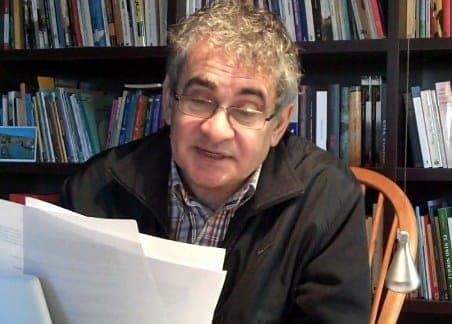
Born Joseba Irazu Garmendia on July 27, 1951, in Asteasu, a village in the hills of Gipuzkoa, he grew up speaking Basque in the last decades of the Franco dictatorship, when the language had been pushed out of schools and public life. He took a diploma in economics at the University of Bilbao and studied philosophy at the University of Barcelona, and for years supported himself as an economist, a bookseller, a teacher of Basque, a publisher and a scriptwriter for radio, writing under the name Bernardo Atxaga. In 1980 he gave up the rest of it. His poetry collection Etiopia (1978) broke sharply with what Basque verse had been doing before it. Obabakoak (1988) made his reputation and, for many readers outside Spain, made Basque literature visible for the first time: linked stories set in the invented village of Obaba, closing with a long meditation on how a story gets made and on the impossibility of originality. Written in Basque and translated into Spanish by Atxaga himself, it won Spain's Premio Nacional de Narrativa in 1989, the first book in the language to take the prize, and has since appeared in more than twenty languages. The novels that followed turned toward the Basque conflict and its long aftermath: Gizona bere bakardadean (1993), published in English as The Lone Man, Soinujolearen semea (2003), translated as The Accordionist's Son, and Zazpi etxe Frantzian (2009), Seven Houses in France. He has been a full member of Euskaltzaindia, the Royal Academy of the Basque Language, since 2006, and joined the Basque academy of sciences, arts and letters in 2010. He remains the most widely translated writer the Basque language has produced.
He grew up in Asteasu speaking a language Franco's state had pushed out of schools and public life. He began publishing in it in the late 1970s, when its unified written standard, agreed by the Basque language academy from 1968, was younger than he was.
The first button needs the app on this device; the second gets it there.
In the canon
- Obabakoak1988