
Author
Cristina Peri Rossi
- Lived
- Lived born 1941
- From
- From Uruguayan
- Born in
- Born in Montevideo, Uruguay
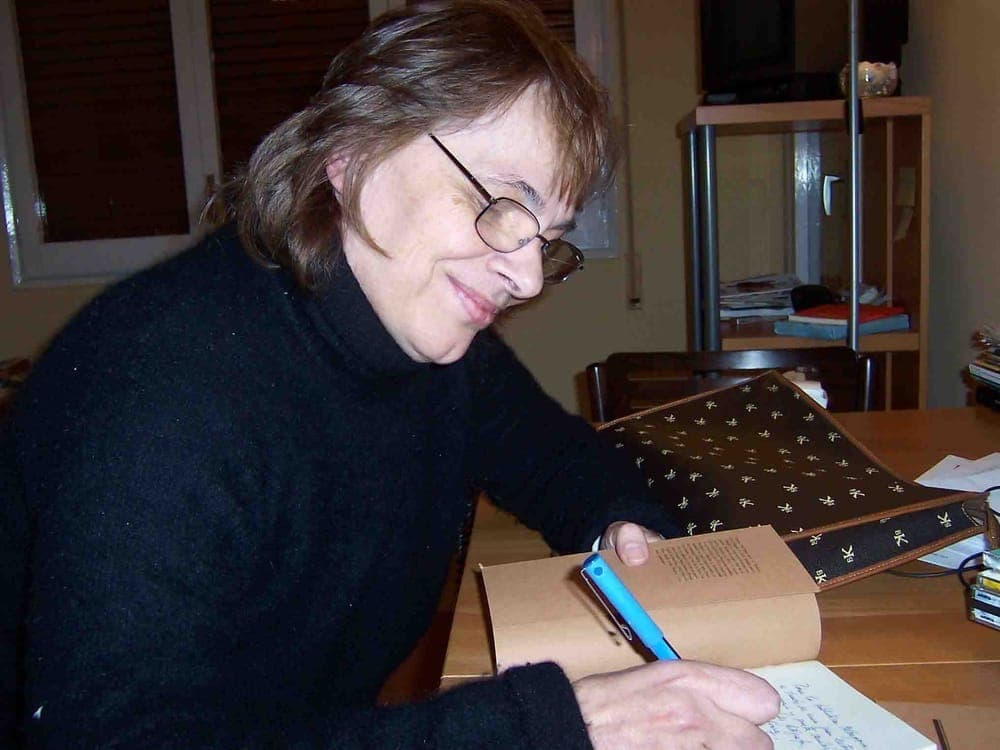
Born on November 12, 1941, in Montevideo, Cristina Peri Rossi studied comparative literature at the University of the Republic and taught in the city for several years while she began to publish. By the early 1970s she had brought out story collections and the novel El libro de mis primos, which won a Uruguayan prize, and Evohe (1971), a book of erotic poems in praise of the female body that a conservative Montevideo received as a scandal. In 1972, as the country slid toward the civil-military dictatorship that would hold power until 1985, the regime banned her books and forbade the mention of her name in the press. She left for Barcelona that year and wrote against the dictatorship in the magazine Triunfo, only to be pursued a second time by Franco's government, which refused her a Spanish passport; with Julio Cortazar's help she fled to Paris in 1974, returning to Barcelona and taking Spanish citizenship in 1975. Exile became her subject and her method. Descripcion de un naufragio (1975) and La nave de los locos (1984), the fragmentary novel of a wanderer known only as X who drifts between borrowed cities and returns always to the Tapestry of Creation in Girona cathedral, are the books most identified with her. Solitario de amor followed in 1988 and La ultima noche de Dostoievski in 1992. She wrote openly as a lesbian across five decades, in poetry, fiction, essays and journalism, and remained an outspoken defender of civil liberties. In 2014 she published Julio Cortazar y Cris, gathering their correspondence and her own writing about him. The autobiographical novel La insumisa appeared in 2020, and the following year she received the Premio Cervantes, the highest honour in Spanish letters. She lives and writes in Barcelona.
She was exiled twice. Barcelona took her in when Uruguay banned her books in 1972, and then Franco's government refused her a Spanish passport. Julio Cortazar helped her escape to Paris in 1974. She was a writer without a country in a city where she did not yet have papers.
The first button needs the app on this device; the second gets it there.
In the canon
- Ship of Fools1984