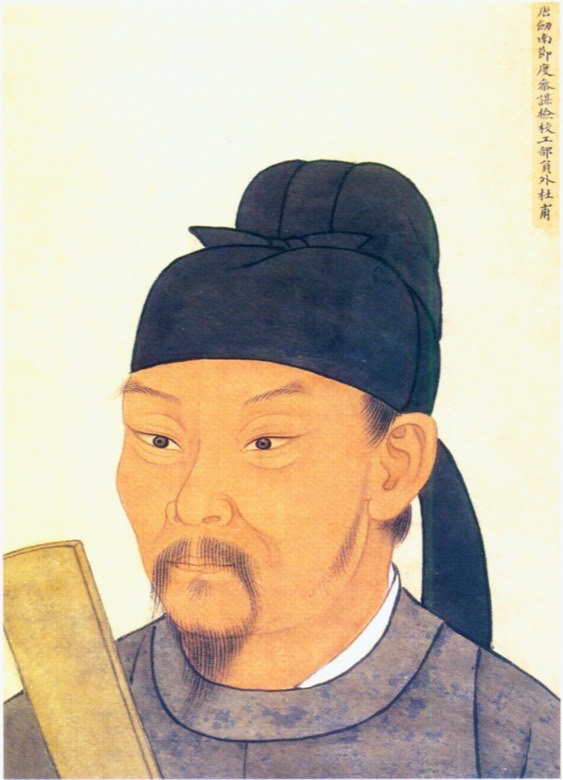
Du Fu
Chinese · 712 to 770
Born in 712 near Luoyang, in Henan, into a family of scholar-officials that had produced the court poet Du Shenyan, his grandfather. He was raised to expect office and spent most of his life failing to get it. He sat the imperial examination in 735 and failed; he sat it again in 747, in a year when the chief minister passed nobody at all and reported to the throne that no talent remained undiscovered in the empire. He spent a decade in the capital petitioning for a post. In 744 he met Li Bai, eleven years his senior and already famous, and for one autumn the two of them travelled together. Du Fu wrote poems about that friendship for the rest of his life; Li Bai answered with a handful. A minor appointment finally came in 755, weeks before the An Lushan Rebellion tore the Tang apart. Travelling to his family, he arrived to find his infant son had starved. He was captured by rebels and held in occupied Chang'an, escaped through the lines in 757 to the exiled court, was made Reminder to the emperor, and was demoted within months for defending a friend too honestly. In 759 he gave up office for good and went west to Chengdu, where friends helped him build a thatched cottage by a stream. Some of his most beloved poems were written there, including the one about the autumn gale that stripped its roof. He drifted down the Yangtze in his last years and died in 770, at fifty-eight, on a boat on the Xiang River. About 1,500 of his poems survive. He was barely read in his own lifetime, and later ages named him the Poet-Sage and called his work the history of an age written in verse, because he put into poetry what the official records left out: conscription, famine, a father's grief, and the exact price ordinary people paid for a war.