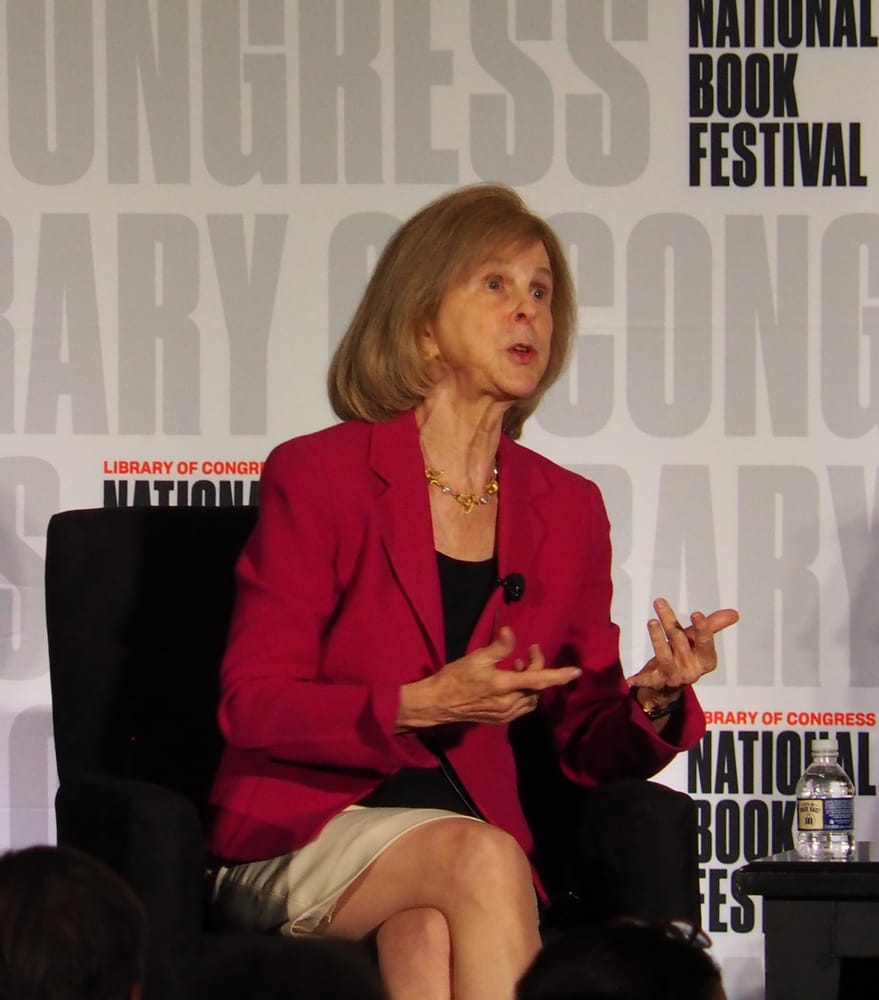
Elaine Pagels
American · born 1943
Born Elaine Hiesey on February 13, 1943, in Palo Alto, California, the daughter of Stanford botanist William Hiesey, Elaine Pagels joined an evangelical church at thirteen and left it soon after, unable to accept the church's teaching that a Jewish friend killed in a car accident would go to hell for not being born again. She earned a bachelor's degree from Stanford in 1964 and a master's in 1965, then went to Harvard for a doctorate in religion, completed in 1970 under Helmut Koester, joining the international team assembling and translating the Nag Hammadi library, a cache of Coptic gospels buried in the Egyptian desert around 367 AD and unearthed by a farmer in 1945. She taught at Barnard College from 1970 to 1982, chairing its religion department for the final eight years, then moved to Princeton University as the Harrington Spear Paine Professor of Religion. The Gnostic Gospels, published in 1979, carried the Nag Hammadi discoveries to a general readership, arguing that early Christianity had been far more diverse and far more contested than the councils and creeds that eventually prevailed ever let on; it won the National Book Award and the National Book Critics Circle Award and helped earn her a MacArthur Fellowship in 1981. In April 1987 her six-year-old son Mark died after years of illness, and some fifteen months later her husband, the physicist Heinz Pagels, died in a climbing accident on Pyramid Peak, Colorado. She wrote her way through that grief in the books that followed, among them Adam, Eve, and the Serpent and The Origin of Satan, and much later in the 2018 memoir Why Religion? She married and later divorced the law professor Kent Greenawalt. Awarded the National Humanities Medal in 2015, she remained Princeton's Harrington Spear Paine Professor of Religion Emerita and published Miracles and Wonder: The Historical Mystery of Jesus in 2025.
In the canon