
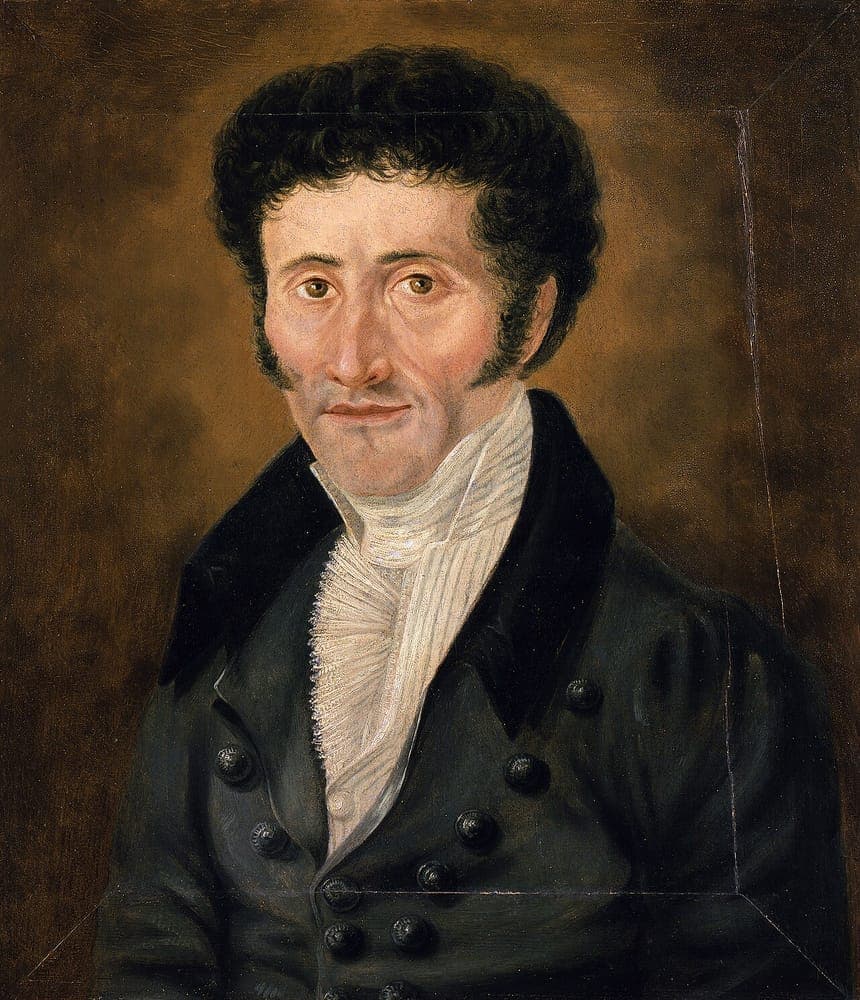
Author
E.T.A. Hoffmann
- Lived
- Lived 1776 to 1822
- From
- From German
- Born in
- Born in Königsberg, Prussia
Born Ernst Theodor Wilhelm Hoffmann on January 24, 1776, in Königsberg, Prussia, he was the youngest child of a barrister and his cousin, who separated when he was two; he grew up in his mother's family home, run by an uncle he nicknamed O Weh, "Oh dear," and two unmarried aunts. He trained in law, heard Kant lecture at the University of Königsberg, and fell in love with a married woman ten years older to whom he gave music lessons, a scandal that sent him off to a clerkship in Glogau in 1796. As a Prussian official in Posen he drew caricatures of army officers for a carnival ball and was banished to Płock for it; in Warsaw, which he remembered as the happiest years of his life, he discovered Novalis, Tieck and Calderón. When Napoleon took Warsaw in 1806 he lost his post, and the months that followed in occupied Berlin brought hunger and the death of his two-year-old daughter. In Bamberg he managed a theatre, taught music and wrote criticism for the Allgemeine musikalische Zeitung, whose reviews of Beethoven set a new standard for writing about music. With Ritter Gluck (1809) he began signing himself E. T. A. Hoffmann, the A for Amadeus, after Mozart. Back on the bench of Berlin's chamber court from 1814, he wrote at speed: The Golden Pot (1814), the novel The Devil's Elixirs (1815), The Sandman and The Nutcracker and the Mouse King (both 1816), Mademoiselle de Scuderi (1819), often called one of the first detective stories, and The Life and Opinions of the Tomcat Murr (1819 to 1821). A satirical portrait of a Prussian commissioner in Master Flea (1822) brought legal proceedings that ended only when his illness proved fatal. He died in Berlin on June 25, 1822, aged forty-six. Poe, Gogol, Dostoevsky and Kafka all learned from him, and Offenbach and Tchaikovsky set his tales to music.
In 1813 Hoffmann was music director to an opera company stranded in Dresden as Napoleon's armies fought over Saxony. During the Battle of Dresden that August the city was bombarded, and people were killed directly in front of him. When the main battle was over he walked out across the battlefield, and later wrote down what he had seen there.
The first button needs the app on this device; the second gets it there.
In the canon
- The Golden Pot1814
- The Devil's Elixir1815
- The Sandman1816
- Tales of Hoffmann1817
- The Life and Opinions of the Tomcat Murr1819