
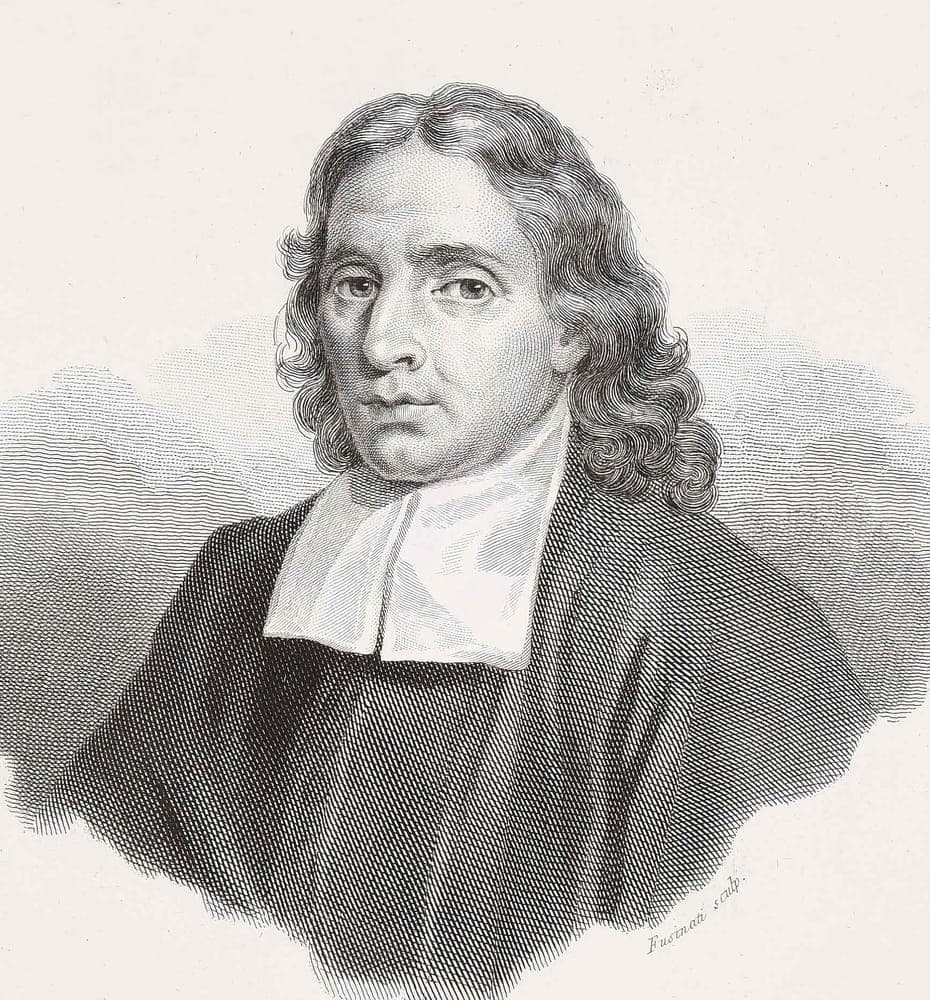
Author
Giambattista Vico
- Lived
- Lived 1668 to 1744
- From
- From Italian
- Born in
- Born in Naples, Italy
Giambattista Vico was born in Naples on 23 June 1668, the son of a bookseller, and grew up among the shelves of his father's shop. By his own account in the Autobiography, a fall from a ladder at the age of seven fractured his skull and kept him from school for three years; he later treated the injury as the start of his life as a self-taught reader. After typhus and a bout of dissatisfaction with Jesuit scholasticism, he left Naples in 1686 and spent nine years at Vatolla, south of Salerno, as tutor to the sons of the Rocca family, reading Plato, Tacitus, Bacon and Grotius in the castle library. He took his degree in civil and canon law in 1694, returned to Naples, married Teresa Caterina Destito in 1699 and won the chair of rhetoric at the university, a modest, poorly paid post he held until 1741. The law chair he wanted most always escaped him; he published Universal Law in the early 1720s to win it and lost the competition. He answered Descartes's confidence in mathematics with a claim that people can know most surely what people have made, and so can know history, law, language and myth from the inside. The New Science, first printed in 1725, then rewritten in 1730 and revised again for the edition that appeared just after his death in 1744, argues that every nation passes through an age of gods, an age of heroes and an age of men, and then, if its reason decays, returns to barbarism and begins again. Almost nobody noticed in his lifetime, though Charles III named him royal historiographer in 1734. Herder, Michelet, Coleridge, Marx and Joyce each found him later, and Joyce built the cycles of Finnegans Wake on his pattern. Vico died in Naples in January 1744, aged seventy-five. Sources give 22, 23 or 20 January for the day.
As Vico tells it in his Autobiography, at seven he fell headfirst from a ladder in his father's bookshop and lay unconscious for hours. The surgeon predicted that he would die or be left a fool. He missed three years of school, and Vico later dated his habit of teaching himself from that injury.
The first button needs the app on this device; the second gets it there.
In the canon
- The New Science1725