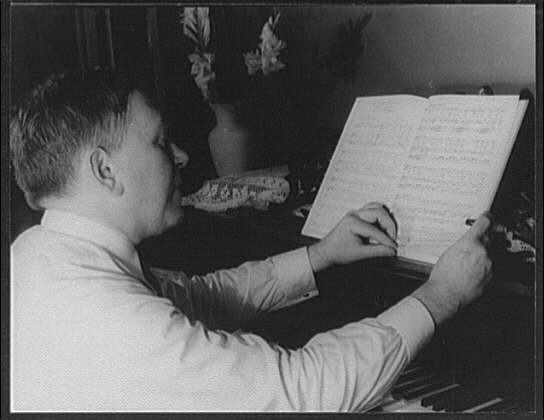
H.L. Mencken
American · 1880 to 1956
Born Henry Louis Mencken on September 12, 1880, in Baltimore, Maryland, to a family of German descent, he grew up in the Union Square neighborhood in what he later called a childhood "placid, secure, uneventful and happy." At nine he read Mark Twain's Huckleberry Finn, an experience he called the most stupendous event of his life, and he graduated valedictorian of Baltimore Polytechnic Institute in 1896 before a brief stint in his father's cigar factory. He talked his way into a reporting job at the Baltimore Morning Herald in 1899, and in 1906 he joined the Baltimore Sun, where he remained, with breaks, for most of his working life. As literary critic for The Smart Set from 1908 and co-founder, with George Jean Nathan, of The American Mercury in 1924, he became one of the most feared and quoted critics in American letters, defending Theodore Dreiser's fiction, mentoring James M. Cain, and covering the 1925 Scopes trial in Dayton, Tennessee, where he coined the name Monkey Trial. His scholarly landmark, The American Language (1919), argued that American speech was a living, inventive tongue in its own right, distinct from British English, and it grew through four editions and two supplements across his lifetime. He married Sara Haardt, a Goucher College professor eighteen years his junior, in 1930; she died of meningitis five years later after a long struggle with tuberculosis, and Mencken never fully recovered from the loss. An outspoken atheist, admirer of Nietzsche, and critic of Prohibition, censorship and the excesses of democracy, he nonetheless published Black writers including Langston Hughes and W.E.B. Du Bois in The American Mercury and testified before Congress against lynching. A stroke on November 23, 1948, ended his career at the typewriter, and he died in his sleep in Baltimore on January 29, 1956, at seventy-five.
In the canon