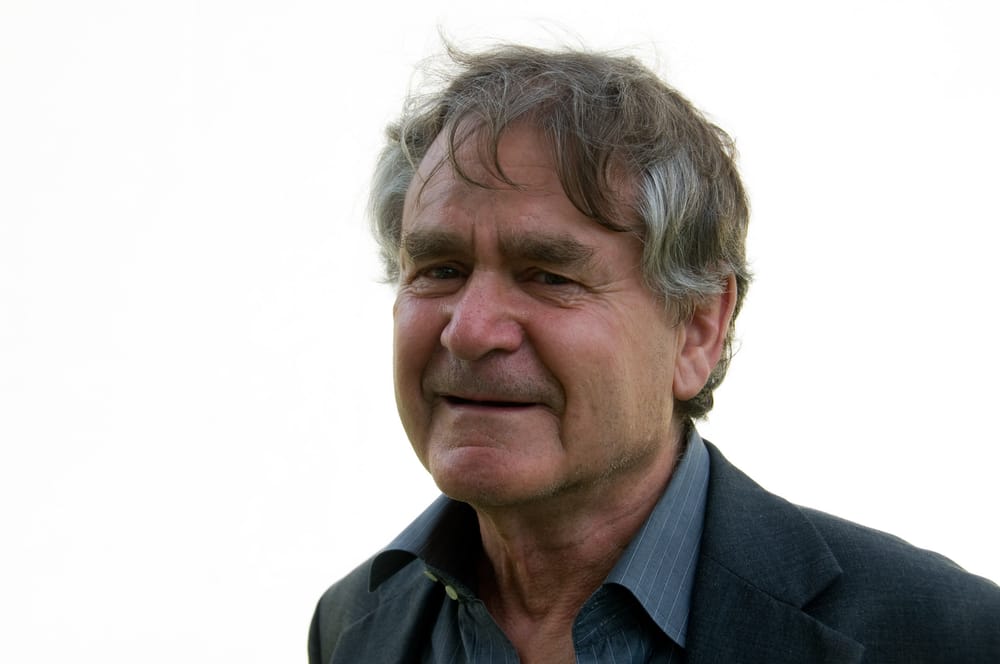
Ian Hacking
Canadian · 1936 to 2023
Born Ian MacDougall Hacking on February 18, 1936, in Vancouver, British Columbia, he grew up on Canada's Pacific coast before crossing the country and then the ocean for his education, earning a degree from the University of British Columbia in 1956 and a further degree, then a doctorate in 1962, from Trinity College, Cambridge, under the philosopher Casimir Lewy, himself a student of G. E. Moore. He taught briefly at Princeton and the University of Virginia before returning to Cambridge as a research fellow, then to UBC, then back to Cambridge again, a restless early career that gave him an unusually wide view of how philosophy was practiced on both sides of the Atlantic. Stanford took him in 1974, and it was there, alongside colleagues including his second wife, the philosopher Nancy Cartwright, that he sharpened the historical, example-driven style that became his signature, writing about ideas by writing about the people, instruments, and institutions that made those ideas thinkable in the first place. In 1983 he moved to the University of Toronto, where he stayed for the rest of his working life and was named University Professor, the university's highest rank, in 1991. From 2000 to 2006 he held a chair at the Collège de France, the first Anglophone philosopher ever elected to a permanent position there. His books ranged from probability and statistics to the philosophy of experiment to the reality of multiple personality disorder, always returning to his central puzzle of how the categories invented to describe people end up changing the people they describe, a process he called making up people. He was appointed a Companion of the Order of Canada in 2004 and won the Holberg International Memorial Prize in 2009 and the Balzan Prize in 2014. He died in Toronto on May 10, 2023, at eighty-seven.
In the canon