
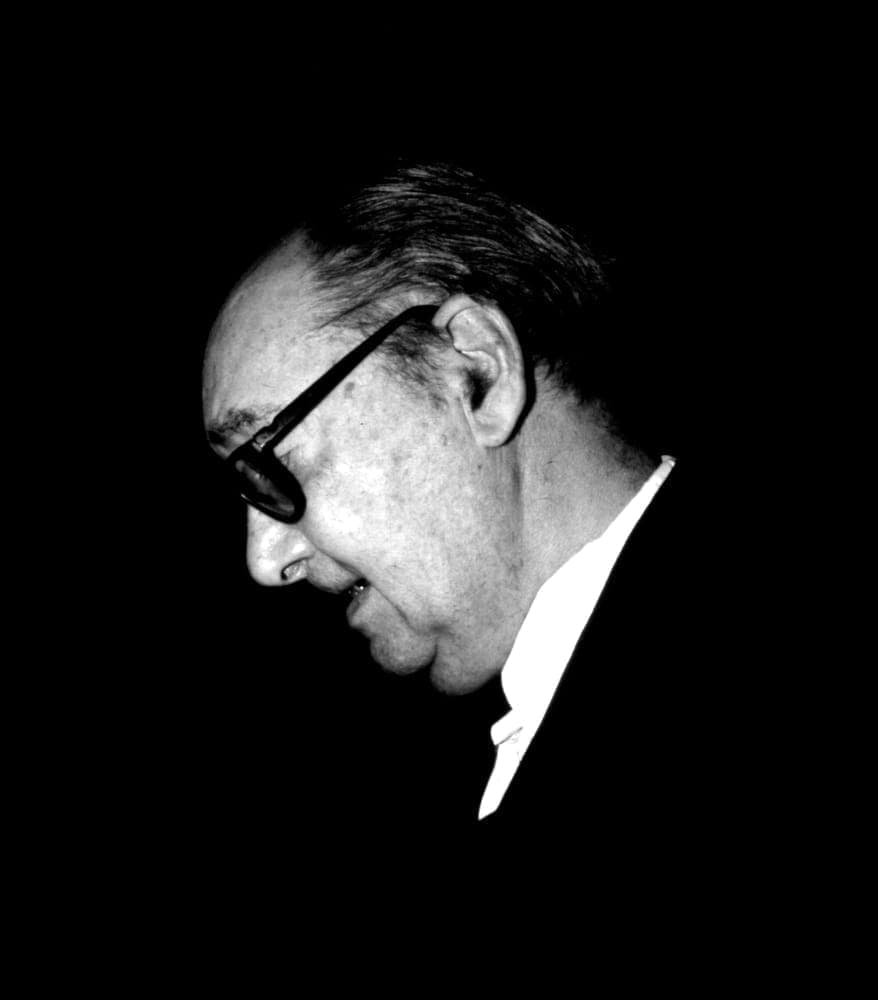
Author
Juan Carlos Onetti
- Lived
- Lived 1909 to 1994
- From
- From Uruguayan
- Born in
- Born in Montevideo, Uruguay
Born Juan Carlos Onetti on July 1, 1909, in Montevideo, the son of a customs official and a mother from a landed Brazilian family, he grew up moving often, attended school only sporadically, and never finished high school. He began working as a journalist in 1930, took a first Buenos Aires job selling calculators, and published his first short story, 'Avenida de Mayo-Diagonal-Avenida de Mayo,' in the newspaper La Prensa in 1933. In 1939 he helped found the Montevideo weekly Marcha, serving as its literary editor while writing a humorous column on the side, the same year his first novel, El pozo, appeared: a short, diary-form confession narrated by a disillusioned dreamer named Eladio Linacero that announced the bleak, interior style he would keep for the rest of his career. He moved to Buenos Aires in 1941 and spent over a decade there working for the Reuters news agency and as a translator and editor of English-language novels. In La vida breve (1950) he gave full shape to Santa María, an invented river town he would return to across his later fiction, sending his recurring antihero Larsen back into it to revive a derelict shipyard in El astillero (1961). He won Uruguay's National Prize for Literature in 1962 and the William Faulkner Foundation's Ibero-American award the following year. In February 1974, under Uruguay's new military dictatorship, he was arrested for sitting on a literary jury that awarded a prize to a story the government judged subversive, and he was held for months, first in prison and then in a psychiatric hospital, while writers including Gabriel García Márquez and Mario Vargas Llosa signed open letters demanding his release. On release he left for Madrid and never returned to Uruguay, taking Spanish citizenship and receiving the Premio Cervantes, Spanish letters' highest honor, in 1980. In his last years he rarely left his bed, writing propped against the pillows with a drink close at hand. He died in Madrid on May 30, 1994, at eighty-four, and is buried in the city's Cementerio de la Almudena.
As a judge for the weekly Marcha's short story contest, Onetti and his fellow jurors gave the prize to Nelson Marra's 'El guardaespaldas,' a story the new military government read as an attack on itself. Marcha published it anyway. Onetti was arrested and held for months, first in jail, then in the Colonia Etchepare psychiatric hospital.
The first button needs the app on this device; the second gets it there.
In the canon
- A Brief Life1950
- The Shipyard1961