
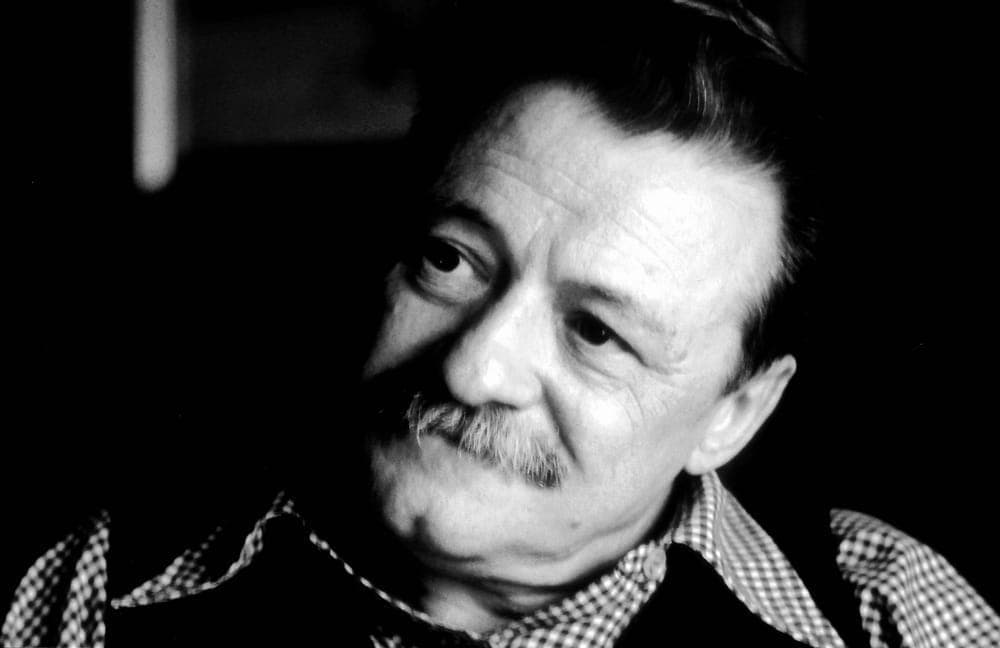
Author
Mario Benedetti
- Lived
- Lived 1920 to 2009
- From
- From Uruguayan
- Born in
- Born in Paso de los Toros, Uruguay
Born Mario Orlando Hardy Hamlet Brenno Benedetti Farrugia on September 14, 1920, in Paso de los Toros, Uruguay, the son of Brenno Benedetti, a chemist of Italian descent, and Matilde Farrugia, he moved with his family to Montevideo as a boy after they lost money to swindlers, and was educated at the city's German school before family finances forced him out of formal study. He worked for years as a stenographer, salesman, cashier, accountant, and civil servant before writing became his living, and in 1945 he joined the weekly Marcha, becoming its literary director in 1954 and writing for it until the military government forced its closure in 1973. His 1956 poetry collection Poemas de la oficina turned the payslips and Monday mornings of his own clerking years into verse, and Montevideanos, a 1959 story collection, established him as a defining voice of Uruguay's Generación del 45. La tregua, published in 1960 and known in English as The Truce, is the diary of a widowed accountant nearing retirement who falls for a young colleague; it became his best known novel, translated into nineteen languages, and its 1974 film adaptation was the first Argentine picture nominated for the Academy Award for Best Foreign Language Film. After the 1973 coup he was forced into exile, threatened by a paramilitary death squad within weeks of crossing into Argentina, deported from Peru after six months, and finally settled in Cuba, working at the Casa de las Américas publishing house while also spending time in Spain. He coined the term desexilio for the disorientation of returning home, which he did in 1985 after twelve years away, the same year the singer Joan Manuel Serrat set a programme of his poems to music on the album El Sur También Existe. Benedetti published more than eighty books of poetry, fiction, essays, and plays. He died at his home in Montevideo on May 17, 2009, at the age of eighty eight, after a long decline in his health.
In 1973, Benedetti crossed the River Plate into Argentina, only for a right wing death squad to threaten him within weeks. He fled to Peru and was deported within six months, then found a longer refuge in Cuba, working at the Casa de las Americas publishing house while also spending time in Spain.
The first button needs the app on this device; the second gets it there.
In the canon
- The Truce1960