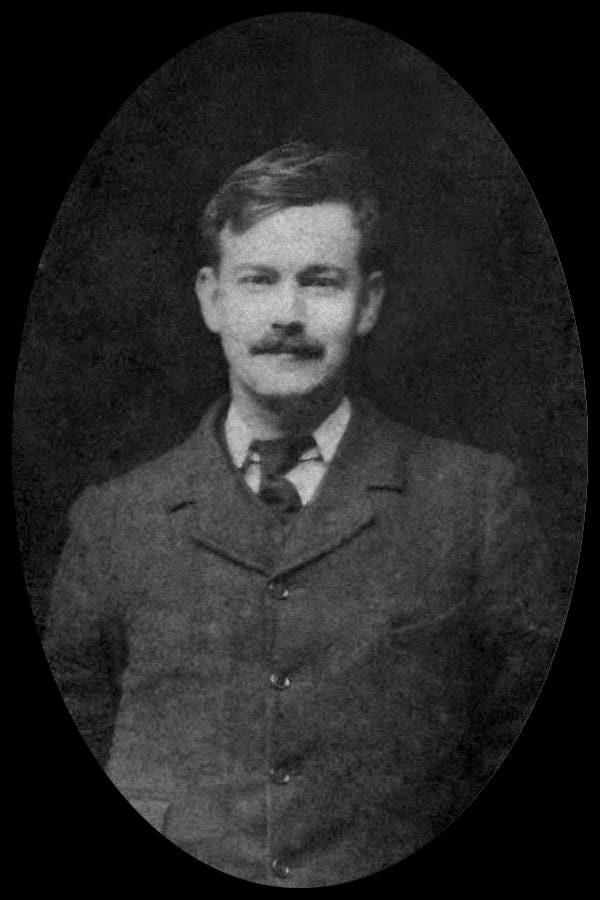
R.H. Tawney
English · 1880 to 1962
Richard Henry Tawney was born on November 30, 1880, in Calcutta, British India, the son of Charles Henry Tawney, a Sanskrit scholar who taught at Presidency College. The family returned to England while he was still young, and he was sent to Rugby School, where he arrived on the same day as William Temple, the future Archbishop of Canterbury, who remained a lifelong friend. He read Greats at Balliol College, Oxford, graduating in 1903, and afterward went to work at Toynbee Hall, the university settlement in London's East End, where daily contact with poverty converted an academic education into a moral one. Alongside his brother in law William Beveridge, he threw himself into the founding of the Workers' Educational Association, and for years before the First World War he taught evening classes to potters in Staffordshire and weavers in Rochdale, an experience he credited with teaching him more about economic history than any archive could. He enlisted as a sergeant in the Manchester Regiment and was wounded twice on the first day of the Battle of the Somme in 1916, an ordeal he later described in an unflinching essay. In 1909 he had married Jeannette Beveridge, his friend's sister. From 1917 he taught at the London School of Economics, becoming Professor of Economic History there in 1931, and he combined that scholarship with a lifelong commitment to the Labour Party, for which he stood for Parliament three times without success. His books, among them The Acquisitive Society, Religion and the Rise of Capitalism, and Equality, argued that economic life could never be separated from moral purpose, and his decades of service to the Workers' Educational Association and to educational reform helped shape the postwar welfare state he did not live to see fully realized. He died in London on January 16, 1962, at the age of eighty one.
In the canon