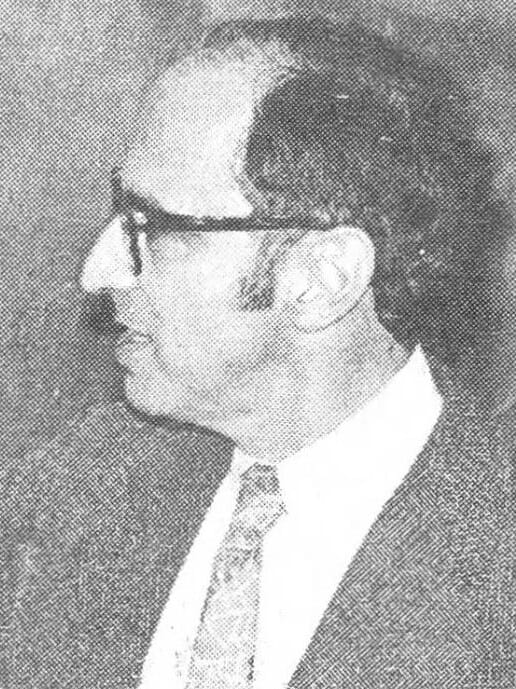
Thomas Kuhn
American · 1922 to 1996
Born Thomas Samuel Kuhn on July 18, 1922, in Cincinnati, Ohio, to Samuel Kuhn, an industrial engineer, and Minette Stroock Kuhn, he grew up in a non-observant Jewish family that prized intellectual seriousness. He excelled at Harvard, taking his physics degree summa cum laude in 1943, a master's in 1946, and a doctorate in 1949 for work applying quantum mechanics to the physics of metals, with wartime service at Harvard's Radio Research Laboratory along the way. He seemed set for a conventional career in theoretical physics until, while preparing a case history for a course on science for non-scientists, he read Aristotle's Physics and found, at first, only the work of an inexplicably poor scientist. Rereading, the confusion resolved itself: Aristotle had not failed at physics, he had practiced an entirely different, internally coherent one, and Kuhn never returned to the laboratory. He stayed at Harvard through the 1950s, first as a Junior Fellow and then as an assistant professor of the history of science, before moving to the University of California, Berkeley, in 1956, where he became a full professor in 1961. It was at Berkeley, drawing on ideas borrowed from Gestalt psychology and the linguist Benjamin Lee Whorf, that he wrote The Structure of Scientific Revolutions, published in 1962 as a slim volume in the International Encyclopedia of Unified Science and destined to become one of the most cited academic books of the century. In 1964 he moved to Princeton as the M. Taylor Pyne Professor of Philosophy and History of Science, and in 1979 to MIT, where he was named the Laurance S. Rockefeller Professor of Philosophy. As a director of an oral history project on the origins of quantum physics, he interviewed Niels Bohr the day before Bohr died. Kuhn married twice, first Kathryn Muhs, with whom he had three children, and later Jehane Barton Burns. He died of cancer of the throat and bronchial tubes on June 17, 1996, in Cambridge, Massachusetts, at seventy-three, leaving an unfinished second philosophical monograph later published from his notes as The Plurality of Worlds.
In the canon