
Author
Vincent van Gogh
- Lived
- Lived 1853 to 1890
- From
- From Dutch
- Born in
- Born in Zundert, Netherlands
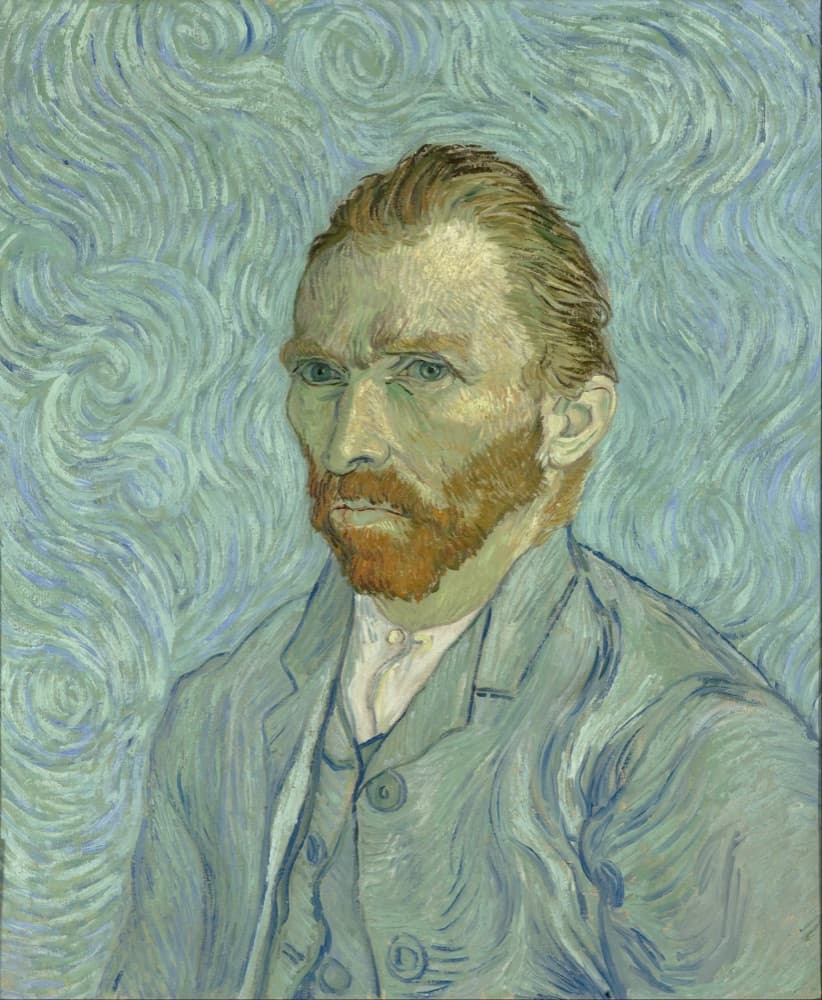
Born Vincent Willem van Gogh on March 30, 1853, in the village of Zundert in the Dutch province of North Brabant, the son of a Protestant minister, he was named for a brother stillborn exactly a year earlier. He left school at fifteen and worked from 1869 for the art dealers Goupil & Cie in The Hague, London and Paris, until he was dismissed in 1876. Teaching and bookselling followed, then a failed bid to become a minister, and in 1879 a mission among the coal miners of the Borinage in Belgium, from which the church also dismissed him. In 1880, at twenty-seven, he decided to become an artist, and his younger brother Theo, an art dealer in Paris, began sending him a monthly allowance that lasted for the rest of his life. He studied drawing from manuals and by copying Millet, and painted dark peasant scenes in the Netherlands, among them The Potato Eaters (1885). In Paris from 1886 he met Pissarro, Toulouse-Lautrec and Gauguin, studied Japanese prints and lightened his palette. In Arles from February 1888 he painted the sunflowers, the yellow house and the night cafe. After Gauguin's stay ended in a quarrel in December 1888, he cut off part of his own left ear and was hospitalised. He entered the asylum at Saint-Rémy in May 1889, where he painted The Starry Night, and moved north to Auvers-sur-Oise in May 1890. In about a decade he made some 2,100 works, among them roughly 860 oil paintings, and wrote more than 800 letters that survive. He shot himself in a field on July 27, 1890, and died two days later, aged thirty-seven. Theo died six months afterwards, and Theo's widow, Jo van Gogh-Bonger, spent decades building his reputation and published the letters.
On December 23, 1888, after a quarrel with Gauguin in Arles, Van Gogh cut off part of his left ear with a razor. He wrapped it, took it to a brothel, and asked for a woman named Rachel to keep it safe. The police found him unconscious at home the next morning, and Theo came from Paris.
La tristesse durera toujours
The first button needs the app on this device; the second gets it there.
In the canon
- The Letters of Vincent van Gogh1914