
In the Library
Ramayana
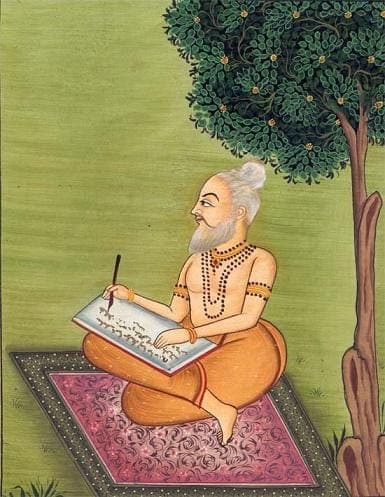
Valmiki, 200 BCE
- Form
- Form Collection
- Difficulty
- Difficulty Demanding
- Reading time
- Reading time 29 hours
- Translated by
- Translated by Ralph T. H. Griffith
- Chapters
- Chapters 6
- Length
- Length 398k words
£1.99
Read in the app, yours for good. Not yet by post.
The book unlocks on your account as soon as you buy it, so the 14-day right to cancel ends once it is unlocked.
With thee is heaven, where'er the spot; / Each place is hell where thou art not.
What buying means
- Yours for good, on every iPhone you sign in to.
- Read in the app’s own reader, with the original beside the translation where there is one.
- Downloaded, so it reads with no signal.
- The same price as in the app. Folio already opens every book on this shelf; buying keeps this one after Folio ends. A refund takes it back.
If you like this, try
Mahabharata
Vyasa
The Mahabharata does the same thing, but multiplies the war into a family's self-destruction and makes duty far harder to call good.
£1.99
The Odyssey
Homer
The Odyssey does the same thing, but sends its hero home to a wife who waited instead of one who walked into exile beside him.
£1.99
The Bhagavad Gita
Vyasa
The Bhagavad Gita does the same thing, but pauses the whole epic machinery to ask what duty actually costs a good man.
£1.99

About the book
Rama, prince of Ayodhya and incarnation of Vishnu, is exiled to the forest on the eve of his coronation, and his wife Sita follows him into the wilderness without protest. Valmiki composed this epic in Sanskrit across the centuries either side of the third century BCE, casting it in twenty-four thousand shlokas and seven books that begin with the poet inventing the meter on hearing a hunter shoot a bird. Ravana, the ten-headed demon-king of Lanka, abducts Sita; the monkey general Hanuman crosses the ocean in a single leap to find her; an army of bears and monkeys builds a bridge of stones to Lanka. The poem teaches dharma through a hero who loses everything by upholding it.