
In the Library
Beowulf
Anonymous, 1910
- Form
- Form Poem
- Difficulty
- Difficulty Moderate
- Reading time
- Reading time 1.5 hours
- Translated by
- Translated by Francis Gummere
- Chapters
- Chapters 42
- Length
- Length 23k words
£1.99
Read in the app, yours for good. Not yet by post.
The book unlocks on your account as soon as you buy it, so the 14-day right to cancel ends once it is unlocked.
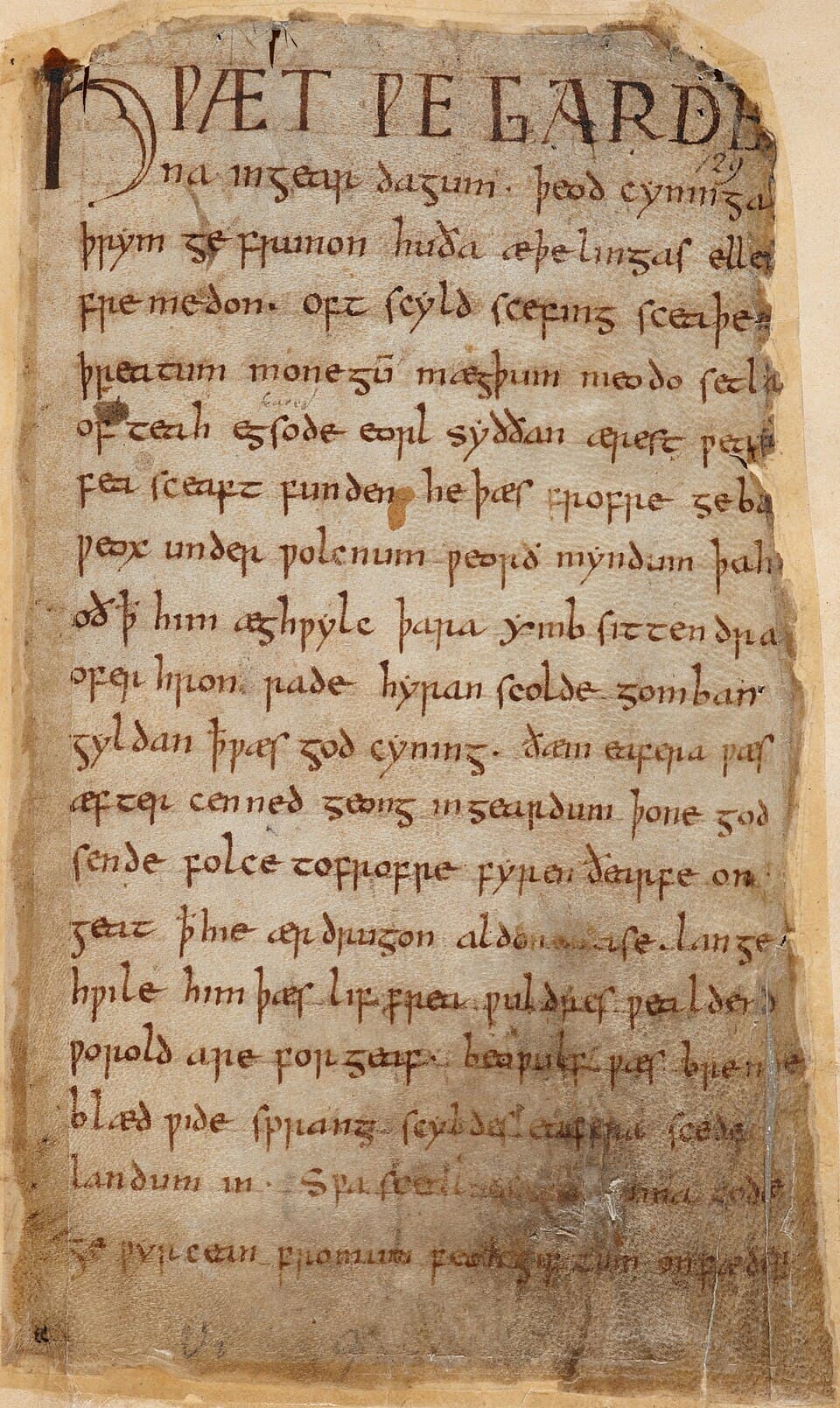
LO, praise of the prowess of people-kings of spear-armed Danes, in days long sped, we have heard, and what honor the athelings won!
What buying means
- Yours for good, on every iPhone you sign in to.
- Read in the app’s own reader, with the original beside the translation where there is one.
- Downloaded, so it reads with no signal.
- The same price as in the app. Folio already opens every book on this shelf; buying keeps this one after Folio ends. A refund takes it back.
The reading guide, in the app
How to Read Beowulf
A poem so freighted with the word epic and the dread of Old English that almost nobody tells you it is, underneath all of that, a fast monster story you can read in an afternoon if you stop trying to study it.
The reputation of Beowulf is that it is the forbidding ancestor of English literature, the thing schoolchildren are made to suffer in a dead language full of thorns and runes, a poem you respect from a great distance and never actually open. The dead-language part is true of the original and has almost nothing to do with you, because you will be reading it in modern English, and what is waiting once you do is a swift, bloody, surprisingly direct story about a strong man who hears that a kingdom is being eaten alive at night and sails across the sea to do something about it. It moves faster than its reputation has any right to allow.
If you like this, try
About the book
Out of the fog-bound moors, where the black mere boils under twisted roots, a shape comes walking toward the lighted hall: Grendel, who cannot bear the sound of men singing and means to silence it tooth by tooth. Against him stands a young warrior who strips off mail and sword to meet the monster bare-handed, because honour will have it no other way. The poem hammers forward on the old alliterative line, two beats and a breath, two beats and a breath, a meter built to be spoken aloud over a fire while the wind worries at the door. There are three fights, each lonelier than the last, and the last sends a grey king alone into a dragon's barrow while his companions slink up the hill. What survives is not the gold, buried cursed beside him, but the grief. Beowulf, the oldest long poem in English, already mourns the brave, doomed world that made it, and sings it into the dark anyway.