
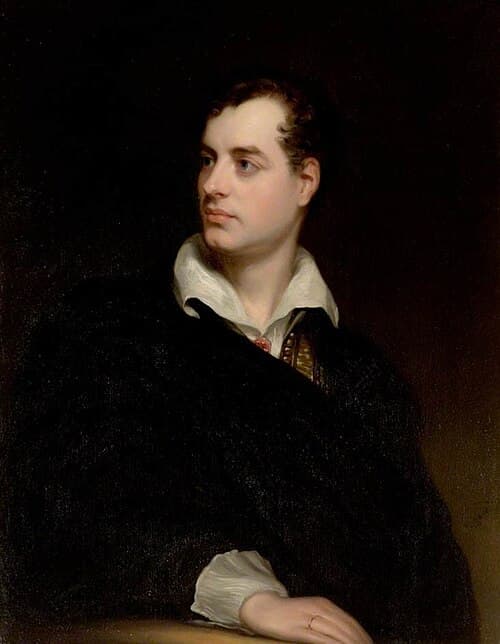
In the Library
Don Juan
Lord Byron, 1824
- Form
- Form Poem
- Difficulty
- Difficulty Moderate
- Reading time
- Reading time 9 hours
- Chapters
- Chapters 18
- Length
- Length 125k words
£1.99
Read in the app, yours for good. Not yet by post.
The book unlocks on your account as soon as you buy it, so the 14-day right to cancel ends once it is unlocked.
Man's love is of man's life a thing apart, 'Tis woman's whole existence
What buying means
- Yours for good, on every iPhone you sign in to.
- Read in the app’s own reader, with the original beside the translation where there is one.
- Downloaded, so it reads with no signal.
- The same price as in the app. Folio already opens every book on this shelf; buying keeps this one after Folio ends. A refund takes it back.
If you like this, try
Eugene Onegin
Alexander Pushkin
Pushkin writes the same Byronic hero in verse, but gives him a Russian winter and a woman who refuses to be seduced.
£1.99
Faust (Part I)
Johann Wolfgang von Goethe
Goethe gives another overreacher the same appetite, but stakes the soul on knowledge instead of pleasure.
£1.99
Dangerous Liaisons
Pierre Choderlos de Laclos
Laclos takes Byron's seducer out of verse and into letters, and the game becomes deadly.
£1.99

About the book
Byron rhymes "intellectual" with "hen-peck'd you all," and that one outrageous chime tells you the game: a comic epic forever winking at its own verse. The Juan here is not the predatory seducer of legend but its mirror image, a sweet, passive, beautiful young man who is shipwrecked, sold into a harem, hurled through a Russian siege, and bedded by an empress, never once doing the seducing. The hijacking is the joke. The real hero is the narrator, a voice of bottomless wit who can turn, between punchlines, startlingly tender, writing that man's love is of his life a thing apart while woman's is her whole existence, then deriding English cant in the very next breath. Digression is not a flaw but the argument, a mind too alive to sit still inside a story. Byron died at Missolonghi with the poem broken off mid-canto, and no tidier ending could have been honest to it.