
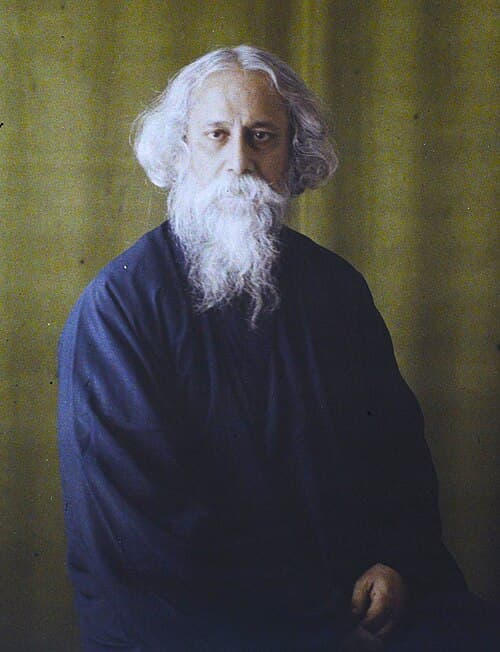
In the Library
Gitanjali
Rabindranath Tagore, 1912
- Form
- Form Collection
- Difficulty
- Difficulty Accessible
- Reading time
- Reading time 45 minutes
- Translated by
- Translated by Rabindranath Tagore (1912)
- Chapters
- Chapters 1
- Length
- Length 10k words
£1.99
Read in the app, yours for good. Not yet by post.
The book unlocks on your account as soon as you buy it, so the 14-day right to cancel ends once it is unlocked.
Where the mind is without fear and the head is held high
What buying means
- Yours for good, on every iPhone you sign in to.
- Read in the app’s own reader, with the original beside the translation where there is one.
- Downloaded, so it reads with no signal.
- The same price as in the app. Folio already opens every book on this shelf; buying keeps this one after Folio ends. A refund takes it back.
If you like this, try
Song of Myself
Walt Whitman
Whitman also sings a boundless, unafraid self swelling to hold a whole people, chanting the freedom Tagore prays his nation awake into.
£1.99
The Second Coming
W.B. Yeats
Yeats too watches a nation and an age turn on the axis of history, though he dreads the darkness where Tagore prays toward the light.
£1.99
Ozymandias
Percy Bysshe Shelley
Shelley shows the tyranny Tagore wants left behind, the shattered empire whose pride time has already ground into sand.
Free in the app


About the book
Seven times a clause opens with the word Where, and each names a condition of a country worth waking into: a mind without fear, knowledge free, reason that has not lost its way into the dreary desert sand of dead habit. Rabindranath Tagore first wrote this prayer in Bengali, then rendered it himself into the English that carried him to the 1913 Nobel, the first in Literature ever awarded outside Europe. It is less a poem about freedom than a held breath before it, a whole nation imagined into being one clause at a time and released only in the final line, when the grammar turns at last to command and asks his motherland to wake into that heaven. Written under empire, it reads now wherever a wall goes up between people. Say that closing sentence aloud, and feel how few words it takes to carry the size of a people's hope.