
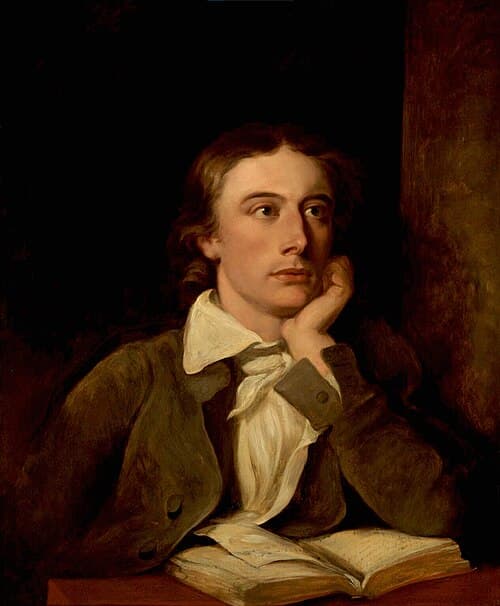
In the Library
La Belle Dame sans Merci
John Keats, 1819
- Form
- Form Poem
- Difficulty
- Difficulty Accessible
- Reading time
- Reading time 5 minutes
- Chapters
- Chapters 1
- Length
- Length 0k words
£1.99
Read in the app, yours for good. Not yet by post.
The book unlocks on your account as soon as you buy it, so the 14-day right to cancel ends once it is unlocked.
Ah, what can ail thee, wretched wight, / Alone and palely loitering? / The sedge is wither'd from the lake, / And no birds sing.
What buying means
- Yours for good, on every iPhone you sign in to.
- Read in the app’s own reader, with the original beside the translation where there is one.
- Downloaded, so it reads with no signal.
- The same price as in the app. Folio already opens every book on this shelf; buying keeps this one after Folio ends. A refund takes it back.
If you like this, try
The Eve of St. Agnes
John Keats
Keats wrote both poems in 1819, and here the enchantment runs the other way: a lover steals into a sleeping girl's dream and carries her off into the storm.
£1.99
The Rime of the Ancient Mariner
Samuel Taylor Coleridge
Coleridge's ballad also has a haunted man telling a stranger how one uncanny encounter left him unable to rest, in the same plain, old-ballad music.
£1.99
Kubla Khan
Samuel Taylor Coleridge
Coleridge's dreamer has fed on honey-dew, and Keats's lady feeds her knight honey wild and manna-dew: two enchantments from the same sweet, dangerous pantry.
£1.99

About the book
The sedge has withered from the lake, and no birds sing. On a cold hillside after the harvest is in, a stranger finds a knight-at-arms loitering alone, a lily on his brow, and asks what ails him; the rest of the poem is his answer. He met a lady in the meads, a faery's child with long hair and wild eyes. He set her on his horse, she fed him roots of relish sweet and honey wild, and in a language strange she told him that she loved him true. Keats copied it into a letter to his brother in the spring of his great odes, and it has the eerie plainness of an old ballad, each stanza closing on a clipped short line that stops like a caught breath. What it knows is how enchantment feels from inside: total, sweet, and already draining the colour from everything else. Twelve small stanzas, and by the last of them the reader understands why no birds sing on that hill, and why he cannot bring himself to leave it.