
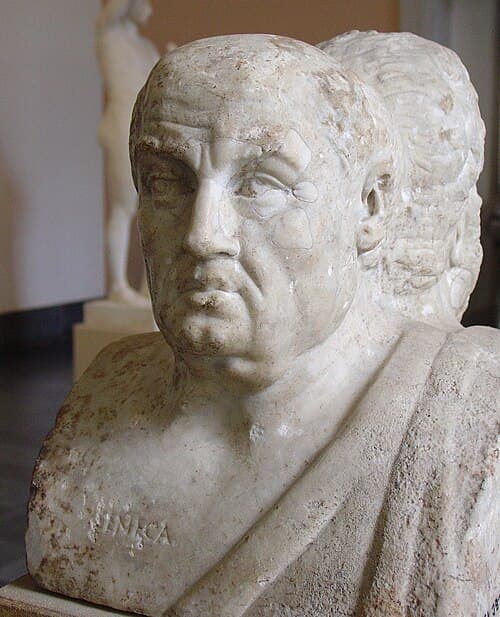
In the Library
Letters to Lucilius
Seneca, 65 CE
- Form
- Form Philosophy
- Difficulty
- Difficulty Moderate
- Reading time
- Reading time 15 hours
- Translated by
- Translated by Richard Mott Gummere (1917-1925)
- Original
- Original lat
- Chapters
- Chapters 124
- Length
- Length 210k words
£1.99
Read in the app, yours for good. Not yet by post.
The book unlocks on your account as soon as you buy it, so the 14-day right to cancel ends once it is unlocked.
In the public domain in the United States only: this edition is sold and read there and nowhere else.
We suffer more often in imagination than in reality.
What buying means
- Yours for good, on every iPhone you sign in to.
- Read in the app’s own reader, with the original beside the translation where there is one.
- Downloaded, so it reads with no signal.
- The same price as in the app. Folio already opens every book on this shelf; buying keeps this one after Folio ends. A refund takes it back.
If you like this, try
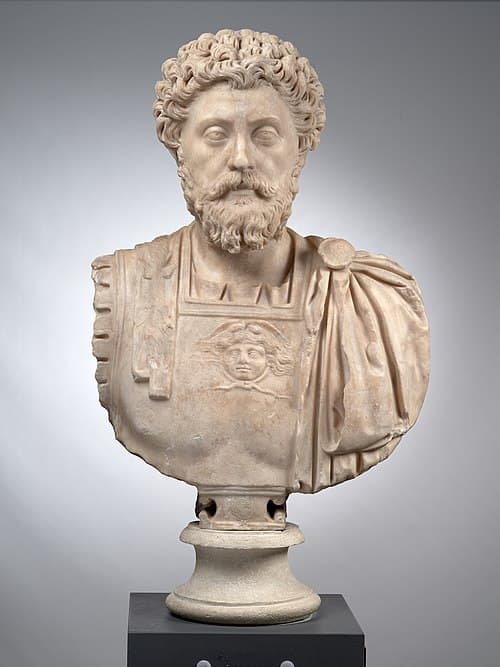
Meditations
Marcus Aurelius
Marcus Aurelius keeps the same Stoic journal, but addresses himself where Seneca addresses a friend: the same medicine, different bedside manner.
£1.99
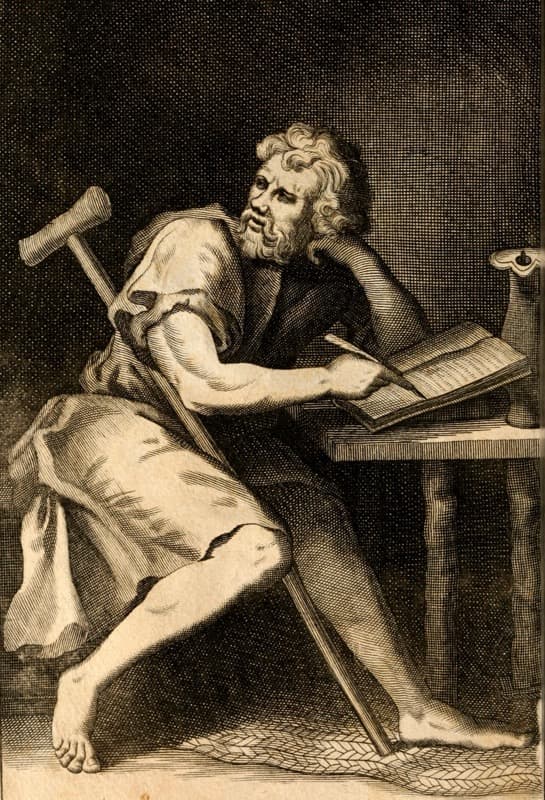
The Enchiridion
Epictetus
Epictetus distils the same Stoic practice into a manual you can carry in your pocket, where Seneca fills a shelf.
£1.99
Walden
Henry David Thoreau
Thoreau practises the same deliberate simplicity Seneca preaches, and the cabin is what the letters describe.
£1.99

About the book
From a rented room above a public bathhouse, grunts and splashes and the cries of the man selling sausages coming up through the floor, Seneca sits down to argue that a steady mind can hold its quiet anywhere. That is the strange charm of these letters to his friend Lucilius: not a treatise handed down from on high but philosophy made to prove itself in the racket of an ordinary day, where the question is never abstract but always, given so little time, what is the right use of this hour? He is candid that he falls short, a rich man preaching simplicity who knows it. And under every page runs a fact that turns the Stoic calm from pose into practice: Nero, the emperor he had once tutored, now wanted him dead, and would soon order it. We suffer more often in imagination than in reality, he tells Lucilius, teaching a friend how to meet death while still, himself, learning the lesson.