
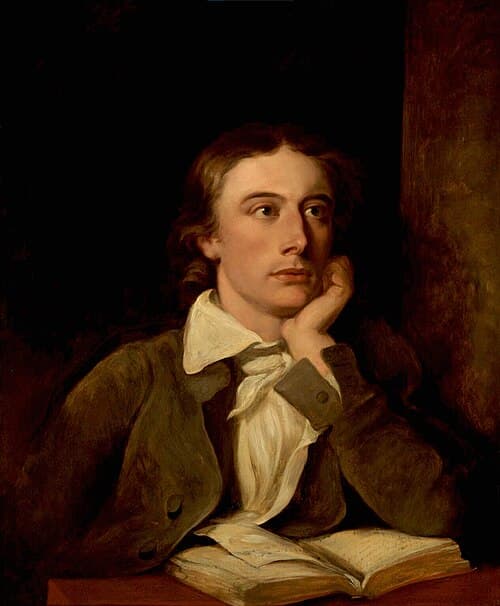
In the Library
Ode to Psyche
John Keats, 1819
- Form
- Form Poem
- Difficulty
- Difficulty Accessible
- Reading time
- Reading time 5 minutes
- Chapters
- Chapters 1
- Length
- Length 0k words
£1.99
Read in the app, yours for good. Not yet by post.
The book unlocks on your account as soon as you buy it, so the 14-day right to cancel ends once it is unlocked.
Yes, I will be thy priest, and build a fane / In some untrodden region of my mind,
What buying means
- Yours for good, on every iPhone you sign in to.
- Read in the app’s own reader, with the original beside the translation where there is one.
- Downloaded, so it reads with no signal.
- The same price as in the app. Folio already opens every book on this shelf; buying keeps this one after Folio ends. A refund takes it back.
If you like this, try
The Golden Ass
Apuleius
The book where the story of Cupid and Psyche was first told, a mortal girl's long ordeal before the gods finally take her in.
£1.99
Ode to a Nightingale
John Keats
Written weeks later, it wanders into the same dim forest and ends on the same question this ode begins with, whether the vision was waking or a dream.
£1.99
Kubla Khan
Samuel Taylor Coleridge
Coleridge also builds a paradise out of pure imagination, a pleasure-dome decreed in the mind the way Keats raises his temple.
£1.99
About the book
Psyche came too late for worship. By the time the old stories made the mortal girl a goddess, the temples of Olympus had gone cold, and she was left with no altar, no choir, no incense, no oracle to sing her name. Keats found that neglect unbearable, and in the spring of his great odes he set out to mend it. The poem opens on a trespass: wandering a forest, he comes upon Cupid and Psyche asleep in deep grass, lips not touching but not yet parted, and he knows the winged boy at once but has to ask who she can be. Then comes the vow that makes the ode his own. He will be her priest and build her a temple in "some untrodden region of my mind," where branched thoughts murmur in the wind instead of pines. The mind itself becomes the shrine, tended with a gardener's patience, and the poem closes on the most generous image Keats ever wrote: a bright torch, and a casement open at night, to let the warm Love in.