
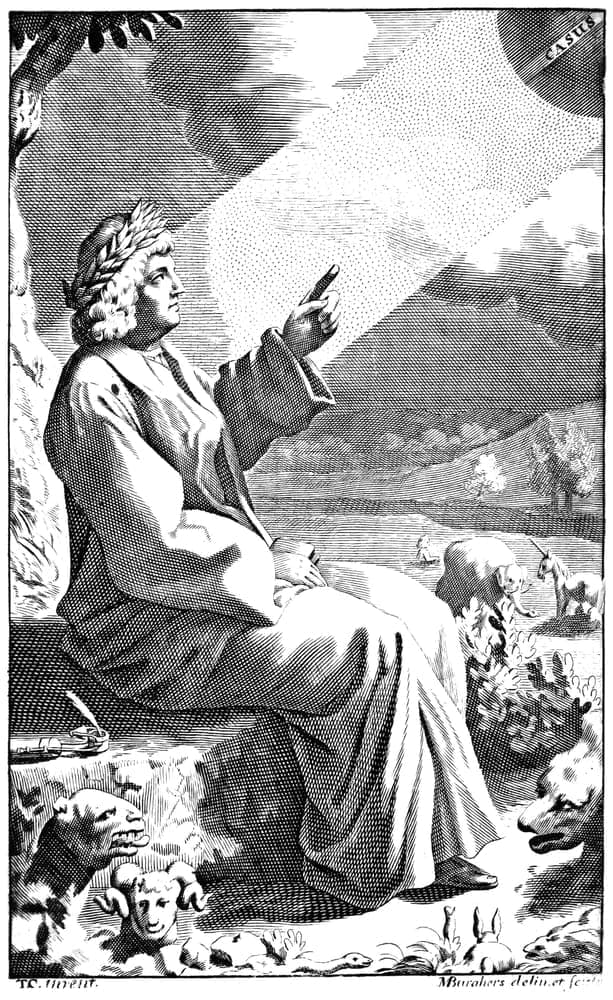
In the Library
On the Nature of Things
Lucretius, 99 BCE
- Form
- Form Poem
- Reading time
- Reading time 5.5 hours
- Translated by
- Translated by William Ellery Leonard
- Chapters
- Chapters 6
- Length
- Length 74k words
£1.99
Read in the app, yours for good. Not yet by post.
The book unlocks on your account as soon as you buy it, so the 14-day right to cancel ends once it is unlocked.
What buying means
- Yours for good, on every iPhone you sign in to.
- Read in the app’s own reader, with the original beside the translation where there is one.
- Downloaded, so it reads with no signal.
- The same price as in the app. Folio already opens every book on this shelf; buying keeps this one after Folio ends. A refund takes it back.
About the book
Atoms fall through an infinite void, swerve infinitesimally, and from that swerve come the seas, the cities, the gods, and the reader holding the poem. Lucretius composed this Latin epic in the first century before the common era, casting the materialist physics of Epicurus into hexameters of such sustained beauty that the doctrine survived its own near-extinction through them. Six books move from the atom to the cosmos, from the soul to the plague at Athens, refusing the consolations of religion and offering in their place the consolation of understanding. There is no afterlife; there is no providence; there is no reason to fear what cannot, by definition, be felt. The poem teaches the reader, line by lapidary line, how not to be afraid.