
In the Library
Pablo de Segovia, the Spanish Sharper
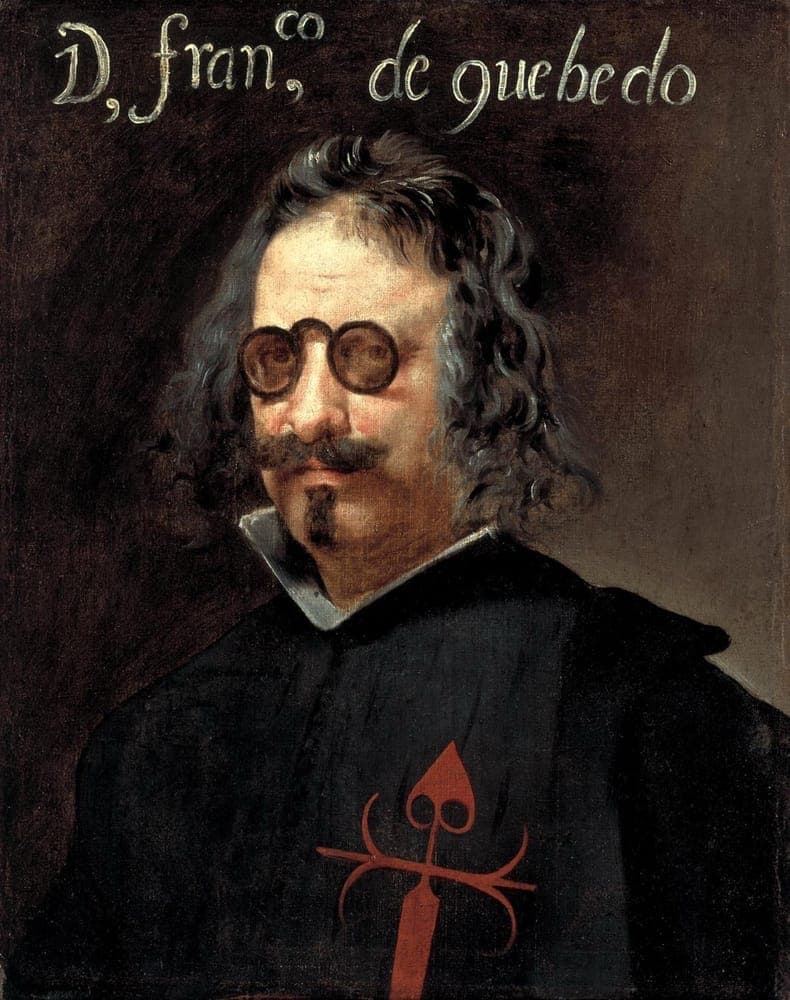
Francisco de Quevedo, 1626
- Form
- Form Novel
- Difficulty
- Difficulty Moderate
- Reading time
- Reading time 3.5 hours
- Translated by
- Translated by Pedro Pineda
- Chapters
- Chapters 23
- Length
- Length 50k words
£1.99
Read in the app, yours for good. Not yet by post.
The book unlocks on your account as soon as you buy it, so the 14-day right to cancel ends once it is unlocked.
I sir, was born at Segovia, my father’s name was Clemente Pablo, a native of the same town; may God keep him in heaven.
What buying means
- Yours for good, on every iPhone you sign in to.
- Read in the app’s own reader, with the original beside the translation where there is one.
- Downloaded, so it reads with no signal.
- The same price as in the app. Folio already opens every book on this shelf; buying keeps this one after Folio ends. A refund takes it back.
If you like this, try
The Golden Ass
Apuleius
Apuleius's hero passes from master to master as a beaten, starving donkey, the same chain of cruel employers the Spanish picaresque would later hand to Pablos.
£1.99
Bel Ami
Guy de Maupassant
Maupassant's Georges Duroy climbs Paris on charm, borrowed articles and other men's wives, the social ascent Pablos keeps grasping for, only this time it works.
£1.99
Moll Flanders
Daniel Defoe
Moll Flanders schemes and reinvents herself with the same restless nerve, but Defoe lets his rogue buy a genuine second life that Pablos's Spain never allows him.
£1.99


About the book
At the school of the licentiate Cabra, Quevedo starves his pupils so completely that their ribs show through their skin and their eyes retreat into their skulls, and he describes it not with pity but with a comic relish that never once looks away. That relish is the whole book. Pablos is born to a thief for a father and a witch for a mother in Segovia, and spends the rest of his life trying to talk, dress, and swindle his way out of that birth into the ranks of gentlemen. Every trick works for a page and fails by the chapter's end, because in Quevedo's Spain blood shows through velvet the way bone showed through Cabra's starving boys. The prose itself is the con: puns stacked on puns, insults sharpened to a point, sentences that pick your pocket while you're admiring their tailoring. Pablos sails at last for the Indies still believing a new country will finish what cunning could not. It never does. A man who only changes his place, and not his life, changes nothing at all.