
In the Library
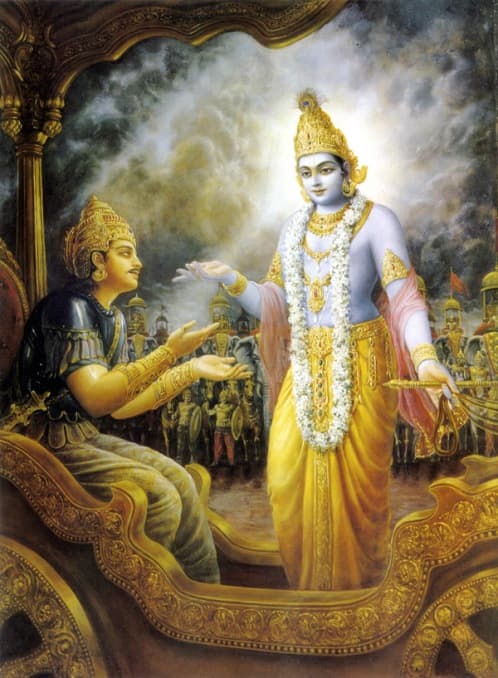
The Bhagavad Gita
Vyasa, 1885
- Form
- Form Poem
- Difficulty
- Difficulty Moderate
- Reading time
- Reading time 1.5 hours
- Translated by
- Translated by Edwin Arnold
- Chapters
- Chapters 18
- Length
- Length 19k words
£1.99
Read in the app, yours for good. Not yet by post.
The book unlocks on your account as soon as you buy it, so the 14-day right to cancel ends once it is unlocked.
Let right deeds be Thy motive, not the fruit which comes from them.
What buying means
- Yours for good, on every iPhone you sign in to.
- Read in the app’s own reader, with the original beside the translation where there is one.
- Downloaded, so it reads with no signal.
- The same price as in the app. Folio already opens every book on this shelf; buying keeps this one after Folio ends. A refund takes it back.
If you like this, try
About the book
Two armies stand drawn up for slaughter, conch shells ringing, and a warrior asks his charioteer to halt the horses in the empty ground between them. There Arjuna looks at the enemy and recognises his grandfather, his teachers, his cousins, and he cannot lift his bow. What follows is not a battle but a conversation: the charioteer is Krishna, god walking the earth as a friend, who refuses to let Arjuna's grief off easily. Across seven hundred Sanskrit verses he turns one man's failure of nerve into the largest questions there are: what dies when the body falls, how to act in a world you did not make, why work done without hunger for its reward is the only freedom. Then, asked for proof, Krishna grants Arjuna divine sight, and the soldier sees every world and every age blazing inside the god's countless mouths. The wonder of the Bhagavad Gita is that it holds the cosmos and a single trembling man in one breath, and tells you, without raising its voice, that you are standing on Arjuna's field already.