
In the Library
Pensées
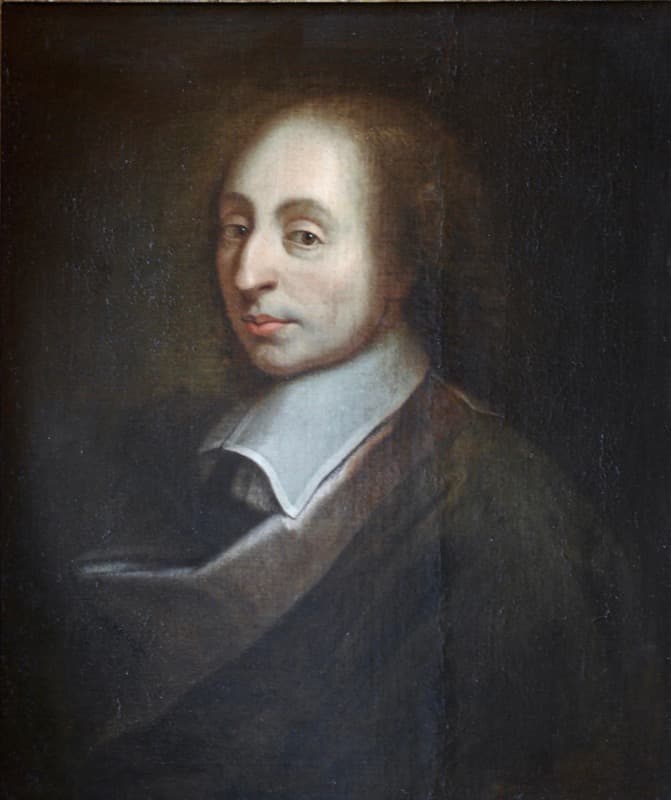
Blaise Pascal, 1670
- Form
- Form Philosophy
- Difficulty
- Difficulty Moderate
- Reading time
- Reading time 7 hours
- Translated by
- Translated by W.F. Trotter (1910)
- Chapters
- Chapters 14
- Length
- Length 95k words
£1.99
Read in the app, yours for good. Not yet by post.
The book unlocks on your account as soon as you buy it, so the 14-day right to cancel ends once it is unlocked.
The heart has its reasons, which reason does not know.
What buying means
- Yours for good, on every iPhone you sign in to.
- Read in the app’s own reader, with the original beside the translation where there is one.
- Downloaded, so it reads with no signal.
- The same price as in the app. Folio already opens every book on this shelf; buying keeps this one after Folio ends. A refund takes it back.
The reading guide, in the app
How to Read Pensées
A book that frightens people off as forbidding French theology, when what you are actually opening is a box of loose, unfinished notes by one of the most honest observers of human restlessness who ever lived.
The reputation of the Pensées is that it is a dense work of seventeenth-century Catholic apologetics, written by a mathematical genius to prove the truth of Christianity, and that reading it means wading through theology you have no stake in. Part of that is fair, because Pascal did set out to defend his faith and large stretches of the book are aimed at exactly that. What the reputation hides is that he never finished, never assembled it, never smoothed it into the persuasive treatise he intended, so that what survives is something stranger and far more alive, a heap of notes in which a brilliant and unhappy man keeps interrupting his own argument to write down, with terrible clarity, what it actually feels like to be a person.
If you like this, try

About the book
"The eternal silence of these infinite spaces frightens me." The man who wrote that line had already built a calculating machine and worked out the mathematics of chance. Then a single night in November 1654 converted him absolutely, and he sewed the record of it onto a scrap of paper hidden in the lining of his coat, found only after he died. Pensées is the rubble of the defense of Christianity he never lived to finish, gathered from scattered notes by editors who could not agree on their order. That disorder is the argument. Here is the keenest mind of its century turning its instruments on faith and reaching the exact place where the instruments give out: why a person must wager on God, why we fill every waking hour with noise out of terror rather than pleasure, why the heart keeps reasons that reason will never know. The book never arrives at its conclusion, because its conclusion was always that, by reason alone, no one arrives.