
In the Library
The Bible
Unknown, 1400 BCE
- Form
- Form Collection
- Difficulty
- Difficulty Demanding
- Reading time
- Reading time 59 hours
- Chapters
- Chapters 66
- Length
- Length 821k words
£1.99
Read in the app, yours for good. Not yet by post.
The book unlocks on your account as soon as you buy it, so the 14-day right to cancel ends once it is unlocked.
In the beginning God created the heaven and the earth.
What buying means
- Yours for good, on every iPhone you sign in to.
- Read in the app’s own reader, with the original beside the translation where there is one.
- Downloaded, so it reads with no signal.
- The same price as in the app. Folio already opens every book on this shelf; buying keeps this one after Folio ends. A refund takes it back.
If you like this, try
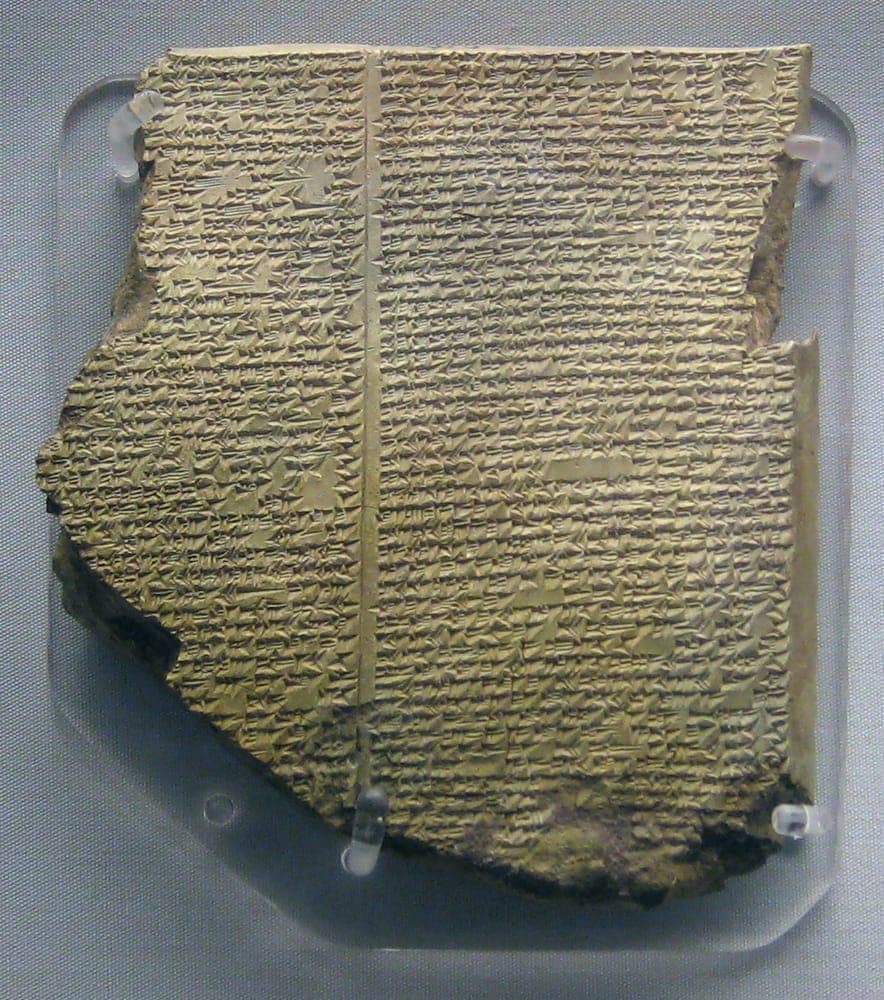
The Epic of Gilgamesh
Anonymous
The Epic of Gilgamesh does the same thing, but from a thousand years earlier, its flood story running so close to Noah's that scholars still debate who copied whom.
£1.99
The Bhagavad Gita
Vyasa
The Bhagavad Gita does the same thing, but for the Hindu tradition, a battlefield dialogue carrying as much scriptural authority and moral urgency as anything in Exodus.
£1.99
Confessions
Saint Augustine
Confessions does the same thing, but through one restless convert's eyes, turning the psalms and epistles he had just discovered into the raw material of his own life story.
£1.99


About the book
The spirit of God moves upon the face of the waters and a voice says, Let there be light, and the world begins in a sentence. Composed across fifteen centuries by anonymous Hebrew and Aramaic scribes, with the Greek New Testament added in the first century AD, the scripture took its English shape from the King James translators of 1611. Sixty-six books in the Protestant canon move from the Pentateuch through the Prophets and the Psalms, then across the Gospels, the Pauline epistles, and Revelation. Abraham raises his knife above Isaac, Job demands answer from the dust heap, Christ sweats blood at Gethsemane, the seventh seal breaks open. Behind it all stands the question of theodicy, posed without flinching and never quite resolved.