
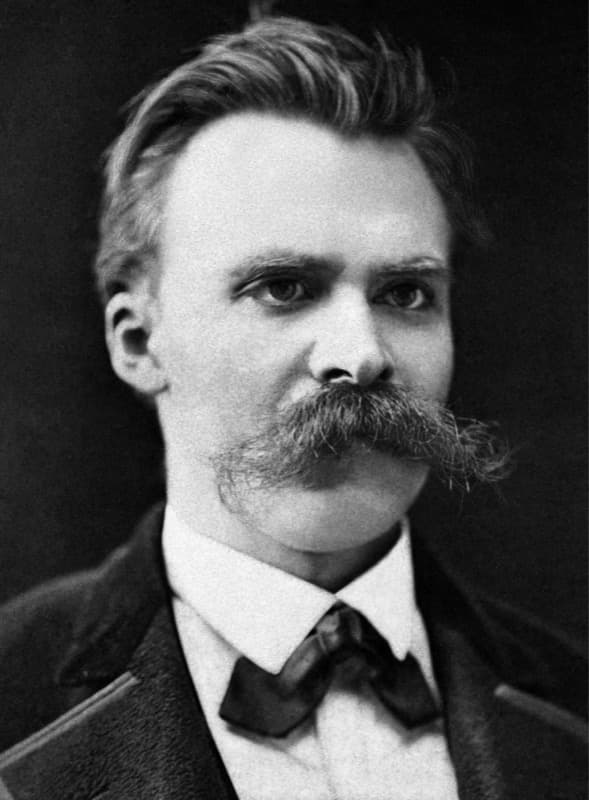
In the Library
The Gay Science
Friedrich Nietzsche, 1882
- Form
- Form Philosophy
- Difficulty
- Difficulty Moderate
- Reading time
- Reading time 6 hours
- Translated by
- Translated by Thomas Common (1910)
- Chapters
- Chapters 8
- Length
- Length 84k words
£1.99
Read in the app, yours for good. Not yet by post.
The book unlocks on your account as soon as you buy it, so the 14-day right to cancel ends once it is unlocked.
God is dead! God remains dead! And we have killed him!
What buying means
- Yours for good, on every iPhone you sign in to.
- Read in the app’s own reader, with the original beside the translation where there is one.
- Downloaded, so it reads with no signal.
- The same price as in the app. Folio already opens every book on this shelf; buying keeps this one after Folio ends. A refund takes it back.
If you like this, try
About the book
Imagine a demon slipping into your loneliest hour to tell you that this life, every pain and joy and unremarkable afternoon of it, you must live again and again in the same sequence, forever. Would you curse the messenger, or fall down grateful? Nietzsche calls this the greatest weight, and he sets it down here for the first time, the eternal recurrence posed not as cosmology but as the hardest question a person can be asked: could you love your existence so completely you would will every detail of it back? The book that holds this question is the one where the madman runs into the marketplace at dawn, lantern lit, howling that we have wiped away the horizon and killed God, and have not yet seen the blood on our hands. And yet its title means joyful knowledge, gai saber, the troubadour's art. Nietzsche wants thought stripped of every comfort to still come out singing. It ends on three Latin words, Incipit tragoedia, and the tragedy that begins is Thus Spoke Zarathustra.