
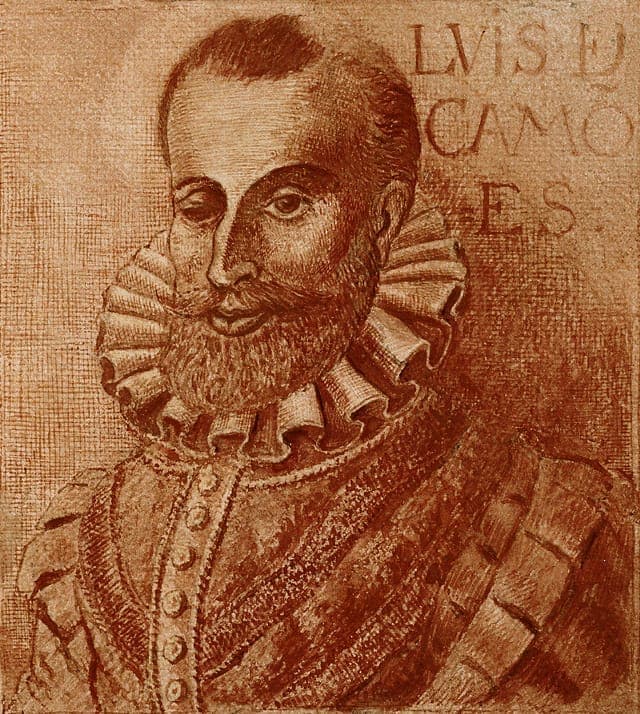
In the Library
The Lusiad
Luís Vaz Camões, 1572
- Form
- Form Poem
- Difficulty
- Difficulty Demanding
- Reading time
- Reading time 5 hours
- Translated by
- Translated by Richard F. Burton
- Chapters
- Chapters 10
- Length
- Length 68k words
£1.99
Read in the app, yours for good. Not yet by post.
The book unlocks on your account as soon as you buy it, so the 14-day right to cancel ends once it is unlocked.
The feats of Arms, and famed heroick Host, from occidental Lusitanian strand,
What buying means
- Yours for good, on every iPhone you sign in to.
- Read in the app’s own reader, with the original beside the translation where there is one.
- Downloaded, so it reads with no signal.
- The same price as in the app. Folio already opens every book on this shelf; buying keeps this one after Folio ends. A refund takes it back.
If you like this, try
The Aeneid
Virgil
The Aeneid sends its hero west under divine escort to found a nation, but Camões swaps Rome's founding for Portugal's, and Jupiter's council for a squabbling pantheon.
£1.99
The Faerie Queene
Edmund Spenser
Spenser built England its own national epic two decades later, mixing classical machinery with Christian purpose to crown a country and its queen.
£1.99
The Odyssey
Homer
Odysseus is the wandering hero Camões names and dismisses in his opening lines, but Gama's voyage sails outward toward empire, not homeward toward Ithaca.
£1.99
About the book
A mass of rock and cloud rises from the sea at the Cape of Good Hope and speaks. He is Adamastor, a Titan turned to stone for reaching after a nymph he could never hold, and he curses every ship that dares round his shoulders into unmapped water. That fury is the reason The Lusiad still grips readers who have never left dry land. Camões sends Vasco da Gama toward India with the gods of Olympus riding along, Venus filling the sails and Bacchus raising storms out of pure jealousy, and turns one small country's voyage into an epic as vast as anything Homer or Virgil attempted. He wrote what he had lived: a soldier who lost an eye fighting the Moors at Ceuta, later a sailor shipwrecked off Cambodia, said to have swum ashore holding these pages above the waves while the woman he loved went under. He came home to Lisbon to publish the poem and die poor within the decade. Few epics have cost their author so much to bring back to shore.