
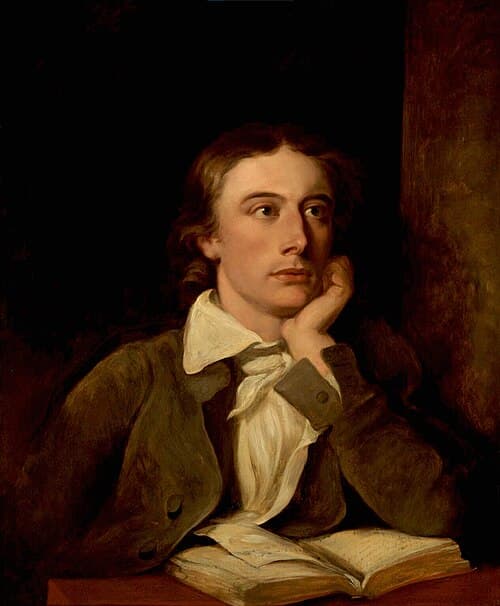
In the Library
Ode on Indolence
John Keats, 1819
- Form
- Form Poem
- Difficulty
- Difficulty Accessible
- Reading time
- Reading time 5 minutes
- Chapters
- Chapters 1
- Length
- Length 0k words
£1.99
Read in the app, yours for good. Not yet by post.
The book unlocks on your account as soon as you buy it, so the 14-day right to cancel ends once it is unlocked.
Ripe was the drowsy hour; / The blissful cloud of summer-indolence / Benumb'd my eyes; my pulse grew less and less;
What buying means
- Yours for good, on every iPhone you sign in to.
- Read in the app’s own reader, with the original beside the translation where there is one.
- Downloaded, so it reads with no signal.
- The same price as in the app. Folio already opens every book on this shelf; buying keeps this one after Folio ends. A refund takes it back.
If you like this, try
Ode on a Grecian Urn
John Keats
The three figures pass like carvings on a vase, and in the urn ode Keats looks hard at such a procession and asks what it means.
£1.99
Song of Myself
Walt Whitman
Whitman does the same thing with idleness, loafing on the grass at his ease, but finds in it an invitation to the soul rather than a farewell to ambition.
£1.99
To Autumn
John Keats
Keats's autumn sits careless on a granary floor as idle as he is here, and turns one drowsy hour into a whole season.
£1.99
About the book
"Ripe was the drowsy hour," and Keats, stretched out on a May morning with no wish to move, watches three figures drift past him like the carved procession on a marble urn. They turn, and he knows them: Love, Ambition, and Poesy, the last of them his demon, the one he loves most. The poem is his refusal to follow any of them. He would sooner lie with his head cool-bedded in the flowery grass, drunk on idleness, and let the bright business of wanting go by. It is the strangest of the great odes, a young poet with barely two years left arguing, beautifully, for doing nothing at all, and the sly joke is that every line spent dismissing Poesy is Poesy at her most seductive. He never published it, though in a letter he admitted it was the thing he had most enjoyed writing that year. Read it on a slow afternoon and feel the sweetness of a morning that asked nothing of him, and the ache of a man who knew how few such mornings were left.