
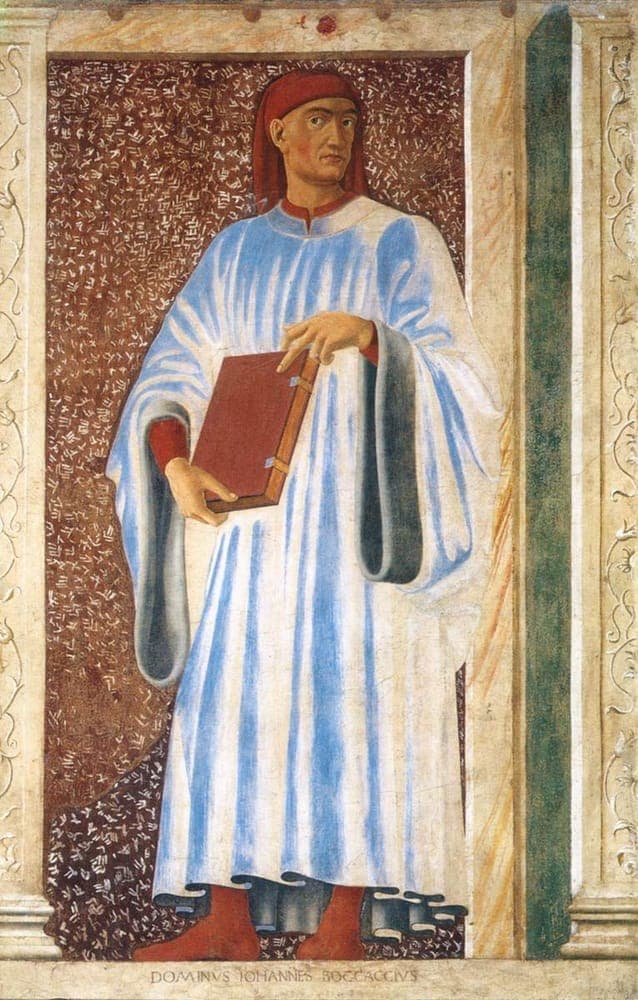
In the Library
The Decameron
Giovanni Boccaccio, 1353
- Form
- Form Collection
- Difficulty
- Difficulty Demanding
- Reading time
- Reading time 21 hours
- Translated by
- Translated by John Payne
- Chapters
- Chapters 122
- Length
- Length 291k words
£1.99
Read in the app, yours for good. Not yet by post.
The book unlocks on your account as soon as you buy it, so the 14-day right to cancel ends once it is unlocked.
A kindly thing it is to have compassion of the afflicted
What buying means
- Yours for good, on every iPhone you sign in to.
- Read in the app’s own reader, with the original beside the translation where there is one.
- Downloaded, so it reads with no signal.
- The same price as in the app. Folio already opens every book on this shelf; buying keeps this one after Folio ends. A refund takes it back.
If you like this, try
The Canterbury Tales
Geoffrey Chaucer
Chaucer borrows the same trick of storytellers passing the days with tales, but swaps Boccaccio's plague villa for a pilgrimage of English road companions.
£1.99
One Thousand and One Nights
Anonymous
This does the same thing with stories nested inside stories to outlast a crisis, but the frame is one woman talking for her life, not ten friends on holiday.
£1.99
Gargantua and Pantagruel
François Rabelais
Rabelais does the same earthy, appetite-driven comedy nearly two centuries later, but pushes the bawdiness into grotesque excess and turns the satire on scholars and priests.
£1.99


About the book
Seven young women and three young men flee plague-stricken Florence for a villa in the Tuscan hills and pass the days telling each other stories. Giovanni Boccaccio composed this prose collection between 1349 and 1353, in the immediate wake of the Black Death that opens the book with one of the most harrowing pieces of reportage in medieval Europe. Across ten days each of the ten storytellers delivers one tale, yielding a hundred in all: tales of merchants, friars, cuckolds, nuns, princes who survive shipwrecks, peasants who outwit kings, husbands who do not. Boccaccio gives the vernacular Italian of Dante a profane and worldly counter-music, alive to appetite, fortune, and the ridiculous fact of human bodies. The frame is quarantine; the storytelling is the cure.