
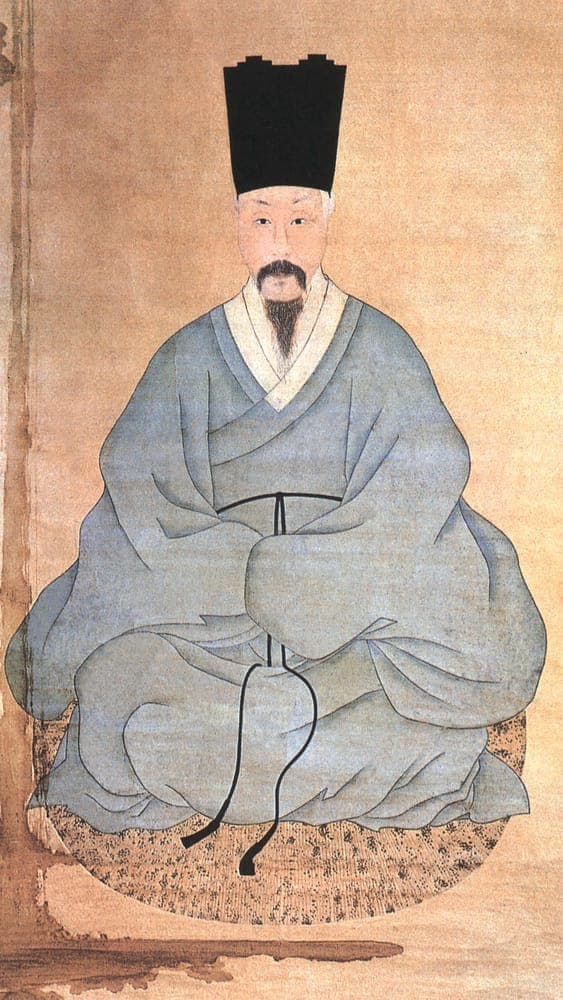
In the Library
The Nine Cloud Dream
Kim Man-jung, 1687
- Form
- Form Novel
- Difficulty
- Difficulty Moderate
- Reading time
- Reading time 6 hours
- Translated by
- Translated by James S. Gale (1922)
- Chapters
- Chapters 16
- Length
- Length 82k words
£1.99
Read in the app, yours for good. Not yet by post.
The book unlocks on your account as soon as you buy it, so the 14-day right to cancel ends once it is unlocked.
Was Chang's becoming a butterfly a dream, or was the butterfly's becoming Chang a dream?
What buying means
- Yours for good, on every iPhone you sign in to.
- Read in the app’s own reader, with the original beside the translation where there is one.
- Downloaded, so it reads with no signal.
- The same price as in the app. Folio already opens every book on this shelf; buying keeps this one after Folio ends. A refund takes it back.
If you like this, try
Siddhartha
Hermann Hesse
Siddhartha does the same thing, but strips away the dream and makes the young monk actually live out wealth, love, and status before renouncing them for enlightenment.
£1.99
Journey to the West
Wu Cheng'en
Journey to the West does the same thing, but turns the Buddhist quest into a comic adventure of demons and trials, not one vivid dream.
£1.99
Dream of the Red Chamber
Cao Xueqin
Cao's young hero lives among a garden of brilliant girls in a great house, then leaves it all as a monk, the same Buddhist awakening from a dream of plenty.
£1.99
About the book
Eight fairy maidens cross a stone bridge, and a young monk who should be thinking only of the Buddha lets his eyes follow them. That single flicker of longing costs him paradise. Cast down into the mortal world, he is reborn as Shao-yu, and lives the most dazzling life a man could want: first scholar of the empire, victorious general, minister, husband to eight radiant women who love him without rivalry. Glory heaps on glory until an old monk taps him on the shoulder and he wakes on his meditation cushion, the whole shining span of it gone in the length of an afternoon nap. Kim Man-jung wrote this for his mother, to console her in his exile, and its consolation is the hardest and gentlest thing Buddhism knows: that our triumphs and our loves are a dream we are always about to wake from, and that waking is not loss. Few books hold a whole life so tenderly and then let it dissolve.