
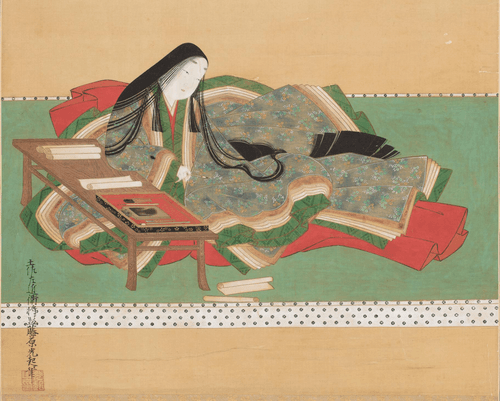
In the Library
The Tale of Genji
Murasaki Shikibu, 1010
- Form
- Form Novel
- Difficulty
- Difficulty Demanding
- Reading time
- Reading time 5.5 hours
- Translated by
- Translated by Suematsu Kenchō (1882, partial: chapters 1-17 of 54)
- Original
- Original ja
- Chapters
- Chapters 17
- Length
- Length 77k words
£1.99
Read in the app, yours for good. Not yet by post.
The book unlocks on your account as soon as you buy it, so the 14-day right to cancel ends once it is unlocked.
though she was not of high birth, enjoyed the full tide of Royal favor
What buying means
- Yours for good, on every iPhone you sign in to.
- Read in the app’s own reader, with the original beside the translation where there is one.
- Downloaded, so it reads with no signal.
- The same price as in the app. Folio already opens every book on this shelf; buying keeps this one after Folio ends. A refund takes it back.
The reading guide, in the app
How to Read The Tale of Genji
Written in the eleventh century by a Japanese noblewoman, it is the world's first novel in any real sense, and its difficulty is not philosophical or stylistic but temporal: it asks you to care about a world so foreign that the caring takes a few chapters to arrive, and then tends to stay.
The reputation makes it sound archaeological, a document requiring specialist knowledge of the Heian court, of poetry conventions, of the robes people wore and the music they played and what it meant when a man sent a poem on paper of a specific colour. That knowledge enriches the novel enormously, and a good translation with notes will offer it, but the experience of reading Genji is not primarily an exercise in cultural anthropology. It is the experience of watching, across fifty-four chapters, a beautiful and gifted and deeply flawed man move through a world of women he desires and grieves and uses and loves in ways that are sometimes hard to respect, and watching those women live their constrained and intricate lives with the full force of their intelligence and feeling.
If you like this, try
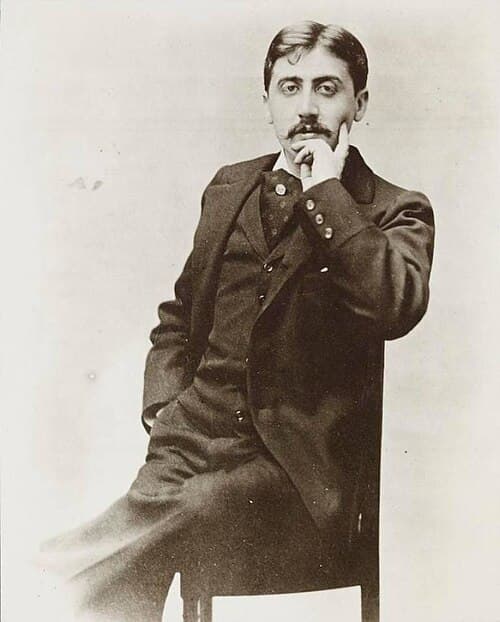
In Search of Lost Time
Marcel Proust
Proust builds the same vast, melancholy world of aristocratic beauty and inevitable loss, nine centuries later.
£1.99
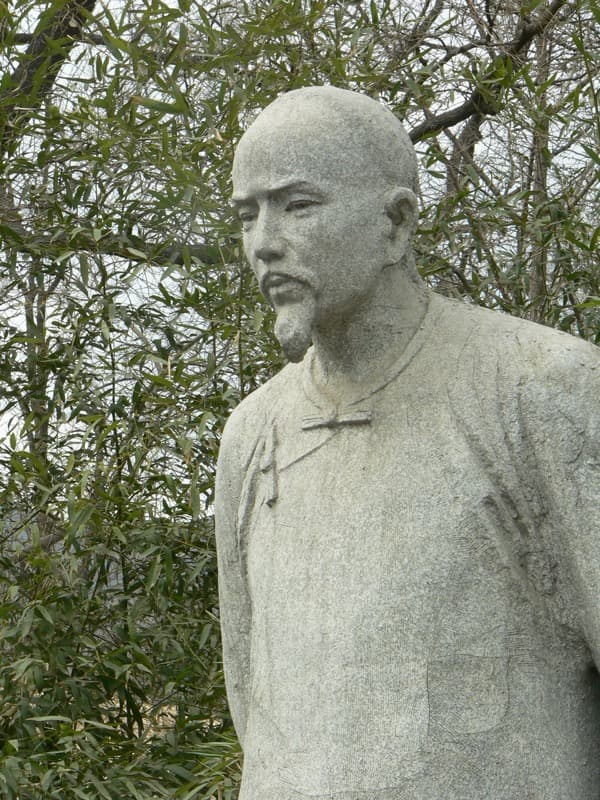
Dream of the Red Chamber
Cao Xueqin
Cao Xueqin writes the same declining splendour: another great house, another doomed sensibility, another civilisation turning to autumn.
£1.99
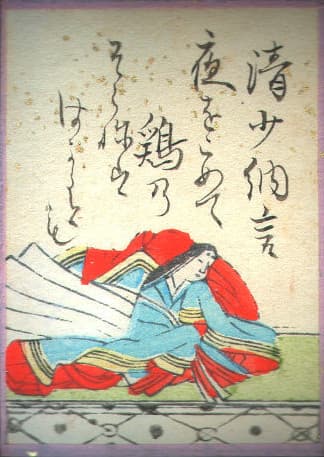
The Pillow Book
Sei Shōnagon
Sei Shōnagon writes from the same Heian court with the same eye for beauty, but in fragments where Murasaki writes in waves.
£1.99
About the book
At the Heian court, a love affair was conducted in poems on scented paper, a single sleeve glimpsed beneath a blind, the precise incense a lover chose for the season. Into this world of screens and ceremony Murasaki Shikibu, a lady-in-waiting, set the Shining Prince, Genji, who moves through fifty-four chapters and a procession of women as though chasing a brightness that keeps dissolving in his hands. Centuries before the European novel located the inner life, she had already mapped it, and mapped it most fully in the women rank and custom keep from acting, whose confinement makes their consciousness the most legible thing in the book. The Japanese have a name for what Genji feels even at the height of his happiness: mono no aware, the ache of passing things, the blossom loved hardest in the instant before it falls. Near the end he simply vanishes, the chapter that should hold his death left blank, and the story drifts on among his descendants as though the radiance had quietly left the room.